Daniel Bellino Zwicke is a best-selling Italian-American cookbook author based in New York City. With over 30 years of experience in the hospitality industry, he has worked in several prestigious Italian establishments and famously created Bar Cichetti, which was recognized as America’s first Venetian wine bar (bacaro). [1, 2, 3, 4] – Amazon.com
Zwicke is widely known for his books celebrating Italian-American culture, traditional regional Italian recipes, and travel guides. He also runs the popular Instagram page @NewYork.Italian, which has hundreds of thousands of followers. [1, 2, 3, 4]
Notable Books & Cookbooks
Zwicke has written numerous highly-rated culinary and travel guides available on Amazon and other major book retailers: [1, 2]
Sunday Sauce: When Italian-Americans Cook – One of his most popular best-sellers, detailing the rituals and recipes of Italian-American families. [1, 2]
Exploring Venice: Travel Guide – Cookbook – A guide mapping out Venice’s best restaurants, historic wine bars (bacari), and sights (including spots frequented by Casanova) paired with regional insights. [1]
The Feast of the 7 Fish / Italian Christmas – A specialized cookbook dedicated to the traditional Italian Christmas Eve seafood feast. [1, 2, 3]
Grandma Bellino’s Italian Cookbook – A collection of authentic Sicilian recipes passed down from his grandmother. [1, 2, 3]
Sinatra Sauce: Music Meatballs & Merriment – A fun, thematic look at Italian cooking tied into cultural iconography. [1, 2, 3]
Got Any Kahlua? The Collected Recipes of The Dude – A pop-culture departure from his traditional Italian works, serving as a cookbook inspired by The Big Big Lebowski. [1]
Location: He lives and writes out of New York’s Greenwich Village, a neighborhood that heavily influences his work through its historic Italian cafes, bakeries, and pork stores. [1, 2]
Education: He attended the New York Technical College to hone his culinary foundations. [1]
Focus: His writing blends explicit recipe instructions with anecdotal history, personal travel stories, and deep dives into wine pairings, particularly regarding the Chianti region.
Daniel Bellino Zwicke lives and works in New York City where he has been a Wine and Restaurant Professional for more than 20 years. Creator of Bar Cichetti “America’s First Venetian Wine Bar” where Daniel was the Chef, Wine Director and Managing Partner. Attended New York Technical College, Daniel has authored; SUNDAY SAUCE “When Italian-Americans Cook” La TAVOLA, THE FEAST of THE 7 FISH “ITALIAN CHRISTMAS” and GOT ANY KAHLUA ? The Collected Recipes of The Dude, a.k.a. The Big Lebowski Cookbook. Daniel is currently working on a new cookbook, yet to be named and a book on Chianti … Daniel is one of America’s Foremost Authorities of Italian Wine …
We Proudly Announce that Daniel’s Book SUNDAY SAUCE is # 1 on Amazon Best Seller List “Italian Cookbooks”
Also, We are Proud to Announce the publication of my newest book; SEGRETO ITALIANO – Secret Italian Recipes and Favorite Dishes ….
“I’ve Just Published POSITANO The AMALFI COAST COOKBOOK / Travel Guide today February 8th, 2021 .. “I’m very excited that I finally finished the book and it is now up and Live on Amazon .com … Hope you all like it.” Thanks, Daniel
June 2026 “I’ve just published my latest book – EXPLORING VENICE – Travel Guide – Cookbook. Stories and Travel info on Venice” – with 40 Recipes of Venice’s most popular dishes.
Served with FAGIOLI (Beans) & PATATE (Baked Potato)
CHIANTI
OLIVE OIL CAKE & VIN SANTO
“ALL For ONLY 50 EUROS”
OUR TUSCAN STEAK FEAST
I have known Dario Cecchini since 2001. That was the first time I went to his macceleria in Panzano. I don’t know him very well, but I have been to his butcher shop a few time, and said hello. Since the last time I was in Panzano, and at Dario’s butcher shop (Macelleria Cecchini) Dario has opened a restaurant, Officina Bistecca in Panzano, across the street from his famous butcher shop. Ever since I heard I was dying to go there. At Officina Bistecca you are treated to an amazing Tuscan Steak Feast by Dario. The feast incudes several courses of Prime Beef Steak in numerous forms – Carne Crudo (Steak Tartare), Carpaccio di Culo which translates to Carpaccio of the Ass, “Haha.” Just a little joke. The Carpaccio is made from Beef Rump (Culo). Then you move on to Tagli Cecchini, then Bistecca Panzanese (T-bone Steak), and then Crostata di Fiorentian (Ribeye Steak), alls served with Fagioli (Tuscan Beans) Roast Potato, Tuscan Butter (Lardo), and all the Chianti you can drink. You finish the meal with a tasty piece of Olive Oil Cake and Vin Santo Dessert wine, all for only 50 Euros. “Quite a Deal? And we Loved it”
The we? Me, and my cousins Tony & Debbie. We had a hard time convincing my cousin Tony. He didn’t want to go, but his wife Debbie loves Steak better than anything, and I love steak as well, and had been yearning to eat there, ever since I heard about it. I had to go. I told Debbie, “come on Debbie, we Gott go.” She agreed, and talked Tony into it. So on Tuesday March 3rd (2026), we drove down there. To Panzano and to the Macceleria Cecchini, for an amazing Tuscan Beef Feast at Dario’s Officina della Bistecca (Office of Florentine T-bone Steak). We were not to be denied, cousin Debbie and I. And so we arrived. It was quite exciting. When we arrived, and parked our car in the adjacent parking lot, we walking in through the maccelleria which was already abuzz with people meeting Dario and getting ready for the steak feast of their lives. The Antica Macelleria Cecchini has been in Dario’s family for many years and Dario is the 8th Generation of his family to run this butcher shop. Dario and the macelleria became famous, a couple years after Dario took over the shop. Dario would often quote the famed Florentine poet – Dante Alighieri, and that’s how he started gaining notoriety and thus became famous, along with the butcher shop. It didn’t hurt that Mario Batali became good friends with Dario, and author Bill Buford apprenticed with Dario and wrote about him in his Best Selling book “HEAT,” which is almost like a biography of Batali, with parts about Dario, and Buford’s experiences apprenticing with both Dario at the macceleria and with Mario at Babbo.
Anyway, back to me and my cousins, and our Tuscan Steak Feast. We had a wonderful time. The dining room is quite convivial, festive, and it’s loads of fun. Needless to say, everyone is happy and in high-spirits. It all starts with Dario making a speech to charge everyone up before we go into eat. Dario blows his bus horn and welcomes everyone to the Maceelleria & Officina dell Bistecca for the Feast to come. “Carne Diem !!! Carne Diem,” Dario shouts, and the crowd outside repeats his chants. Everyone is all charged-up and ready to go.
Anyway. We had the Steak Feast. We Loved it, and all agreed that it was a very special thing to do, and a day we shall always remember. And needless to say, “Cherish,” always.
After we got back home in the USA, me in New York, and Tony & Debbie down in Florida, I gave Tony a call one day, and we talked about the trip, (a Week in Tuscany). We talked of Lucca, going to Villa Santo Stefano Wine Estate (Lucca), our day in Bolgheri, on the Tuscan Coast, and our day at Dario’s, and Tony said to me, “You know, the Best Thing we did, was going to Dario’s (Macelleria Cecchini & Officina Bistecca). I agreed, and was quite happy to say that. Happy that he didn’t just agree because that’s what Debbie & I wanted to do more than anything, and Tony was going along. No Tony loved it just as much as we did. And so, that was our day with Dario. I chatted a bit with Dario and I shot some video to make a little film (video) of Dario, the famous butcher shop, and our “Wonderful” Tuscan Steak Feast. Yes a day to remember, and one I hasn’t forget. It was so very cool.
Daniel Bellino and Dario Cecchini share a deep connection rooted in a mutual passion for traditional culinary arts, particularly celebrated through Cecchini’s legendary Tuscan butcher shop.
The CONNECTION
Daniel Bellino-Zwicke is a prominent New York-based Italian-American cookbook author, wine educator, and food writer. He has frequently documented his travels to Italy and his high-profile culinary encounters, notably featuring Dario Cecchini across his social media platforms, blogs, and videos as a supreme “Master of Meat”.
Acclaimed Restaurants: He runs three specialized dining concepts directly attached to his shop: Officina della Bistecca (famous for its 8-course Florentine steak progression), Solociccia, and Panzanese.
Theatrical Flair: Dario is famous for his rock-and-roll attitude, energetic hospitality, and shouting his signature catchphrase, “To Beef or Not to Beef!” while passionately reciting Dante’s Divine Comedy to his guests.
Daniel Bellino’s Perspective
Bellino-Zwicke first visited Cecchini’s butcher shop in 2003 before the attached restaurants were open, and has since returned to experience the full communal dining feasts. Through his books (like Sunday Sauce) and food tours, Bellino bridges the world of authentic Greenwich Village New York-Italian food with the ancient, soulful culinary traditions kept alive by masters like Cecchini in Tuscany.
“CARNE VINO e ROCK N’ ROLL” says DARIO
MACELLERIA CECCHINI
PANZANO, ITALY
DARIO
“The KING of BEEF”
ETRUSCACAN STEAKS & MORE !
BELLINO & CECCHINI
Bellino & Cecchini refers to the renowned Italian Cookbook author – Daniel Bellino Zwicke and his travels to visit the famous Italian Butcher Dario Cecchini [1,2]
Daniel Bellino-Zwicke is a New York-based Italian food historian, wine expert, and the bestselling author of several Italian cookbooks, including Sunday Sauce and Grandma Bellino’s Italian Cookbook. He is well-known in the Greenwich Village food and wine scene and previously created America’s first Venetian wine bar, Bar Cichetti. [1, 2, 3, 4, 5]
Dario Cecchini is an eighth-generation, world-famous butcher from Panzano in the Chianti region of Tuscany, Italy. He is globally celebrated for his philosophy of utilizing every part of the animal and his theatrical butchery, where he pairs premium cuts with poetry and rock-and-roll. [1, 2, 3, 4]
The two crossed paths when Bellino visited Cecchini’s renowned butcher shop, Antica Macelleria Cecchini, and attended the legendary Tuscan steak feasts at Officina della Bistecca in Panzano. [1, 2, 3, 4]
If you are interested in their work, you can:
Explore Daniel Bellino’s authentic Italian recipes on Amazon.com or check out his latest updates on ThriftBooks and Instagram.
Read about Dario Cecchini’s butchery philosophy and history on his official website Macelleria Cecchini
In 1991, the romantic comedy-drama “Frankie and Johnny” gave Al Pacino a rare chance to step away from his typically belligerent, tough-guy roles. Instead of playing a gangster or a police officer, he portrayed a short-order cook who falls for a waitress. While his character served classic diner fare like burgers and fries, Pacino’s real-life tastes lean toward equally uncomplicated comfort food. In fact, one of his go-to dishes whenever he is at Barbetta in Manhattan is spaghetti aglio e olio, a minimalist, quintessential short-order dish at Italian restaurants.
According to Daniel Bellino Zwicke’s book, “Positano the Amalfi Coast Cookbook: Travel Guide,” Pacino ordered the humble pasta dish every time he visited the Barbetta, even though the restaurant does not offer it on its menu. The actor’s fondness for the meal extends to another New York-based restaurant, Serafina, which even named the dish on its menu as “Spaghetti Aglio & Olio ‘Al Pacino'” after the Hollywood star’s repeated orders.
Spaghetti aglio e olio is a fitting choice for Al Pacino because the dish reflects both his Italian heritage and his humble beginnings before becoming one of Hollywood’s most awarded actors. Born in East Harlem to Italian immigrants and later raised in the Bronx after his parents divorced, Pacino has long embraced his roots, even joking that Italians in America are usually “half Italian”, whereas he is “all Italian.” His favorite pasta dish is also deeply connected to southern Italian cooking, particularly Naples. “I’m mostly Sicilian, and I have a little bit of Neapolitan in me,” he quipped (via Golden Globes).
Pacino’s appreciation for the dish may also stem from the difficult years he spent trying to break into the acting scene. Before landing major roles, the “Godfather” star worked low-paying jobs to support his acting studies. At times, he was unemployed and seeking shelter wherever he could, which sometimes meant on the streets while attending auditions and studying. During those lean years, inexpensive meals like spaghetti aglio e olio would have been a practical option. After all, cooking spaghetti agilo e olio is like making pasta from stuff that’s already in your kitchen. Most of its ingredients, including the spaghetti noodles, garlic, olive oil, and red pepper flakes, are pantry staples. Since olive oil is the star of this dish, however, it’s worth investing in good extra-virgin olive oil for the best flavor. Another tip: Add parsley and grated cheese for extra flavor and richness.
The menu at John’s has most of the expected Red Sauce dishes like; Spaghetti with White or Red Clams Sauce, Veal Saltimbocca,Chicken Scarpariella, Veal Piccata, Speedino of Mozzarella alla Romano, Baked Clams Oreganata, Spaghetti & Meatballs, Lasagna, and Canneloni. The kitchen churns out real solid Italian-American food, with standouts being there Baked Clams and their Speedino alla Romano which is without question the best in the city. John’s has quite a history with Lucky Lucciano being a regular once upon a time, along with numerous mobsters back in the day, and John’s has seen the likes of The Ramones, Cindy Lauper, John Lennon, Tom Cruise, and other luminaries walk through its doors.
There’s one other old Red Sauce Joint around the corner from John’s, and that’s Lanza’s on 1st Avenue and 11th Street (sadly Closed in 2016). Lanza’s was actually a few years older than John’s opening in 1904. Lanza’s is pretty nice and a good part of it has been preserved, although a few years ago they made some changes to the décor which sort of ruined it a bit. Lanza’s had that great classic “Red Sauce Joint” menu with items like Spaghetti Marinara, Pasta Fagioli, Manicotti, Braciole, Cannoli, and the like.
Yes, sadly Lanza’s has closed, along with DeRobertie’s Sicilian Pastry Shop next door. Both of these wonderful old-school Italian businesses were in business for more than 100 Years each, before they both sadly closed a few years ago. It’s a sin to lose wonderful old places like Lanza’s and DeRoberties. Places with so much history and old world charm of days gone by. These places will never be replaced. So sad. Thankfully John’s still stands and operates.
Seeing Daniel Bellino-Zwicke at a café feels like a scene straight out of one of his own books. As a writer who practically lives and breathes the atmosphere of Greenwich Village and the storied cafés of Italy, he is often found capturing the essence of “The Good Life” (La Dolce Vita) over an espresso or a glass of wine.
The Vibe of a Bellino-Zwicke Writing Session
If you’ve spotted him with a notebook or laptop, he’s likely weaving together his signature blend of culinary history, personal anecdote, and Italian-American culture. His writing style is conversational and evocative, often making the reader feel like they are sitting right across the table from him.
What He Might Be Working On:
Sunday Sauce & Secret Recipes: He is best known for Sunday Sauce and Segreto Italiano, books that treat recipes as sacred family oral histories.
Travel Journals: He frequently writes about his adventures in Venice, Rome, and Sicily, focusing on the small, authentic bars and trattorias that tourists often miss.
Pop Culture Narratives: From The Big Lebowski Cookbook to stories about Sinatra and Scorsese, he often explores the intersection of food and iconic cinema.
NOTABLE WORKS by Daniel Bellino Zwicke
SUNDAY SAUCE. – The Definitive Guide to Italian-American “Gravy” aka Sunday Sauce,
and ITALIAN FAMILY Traditions
The FEAST of The 7 FISH – A deep dive into the Classic Italian-American Christmas Eve Seafood
Feast – Recipes
GRANDMA BELLINO’S ITALIAN COOKBOOK – Italian Heritage Recipes of author Daniel
Daniel Bellino’s Z’s Sicilian Nonna
NONNA BELLINO
La TAVOLA – Italian-American New Yorkers Adventures of The Table. Blending the Joy of Travel Cooking and Eating Italian-Food
Bellino-Zwicke doesn’t just write about food; he writes about the feeling of a place. Whether he’s at a small zinc bar in Paris or a corner spot in the Village, the café is his natural habitat—a place to observe the world and translate it into “the secret sauce” of his next chapter.
Frank Sinatra loved Veal Milanese. His Dad Marty used to make it for young Frank and Sinatra ate Veal Milanese over a thousand times at his most favorite restaurant in the World, PATSY’S of NEW YORK on West 56th Street .. Franks other favorites were; Clams Posillipo, Spaghetti & Meatballs, SUNDAY SAUCE, and Rigatoni Marinara …
See Daniel Bellino Zwicke’s book “SUNDAY SAUCE” When Italian-Americans Cook for recipes of Sinatra’s favorite dishes and recipes for SUNDAY SAUCE alla SINATRA and DOLLY SINATRA’S MARINARA ..
And MANGIA BENE !!!
VEAL MILANES RECIPE alla SINATRA
INGREDIENTS
2 cups Bread Crumbs (Plain)
2 tablespoons freshly grated Parmigiano-Reggiano
1/4 cup minced flat-leaf parsley
1 cup plus 3 tablespoons olive oil
1/4 teaspoon salt
1/8 teaspoon freshly ground black pepper
1/2 cup all-purpose flour
2 large eggs, beaten
4 veal cutlets (about 1 1/4 pounds), pounded thin to slightly less than 1/4 inch
Salt and freshly ground black pepper to taste
1 lemon, cut into 8 wedges
DIRECTIONS
Break or cut the bread into large chunks and place in a food processor. Process until the bread is reduced into fine crumbs. Transfer the crumbs into a large bowl and stir in the cheese, oregano and parsley. Gradually add 3 tablespoons of oil, stirring until thoroughly combined. Season with salt and pepper.
Spread the flour onto a large plate, plate the eggs in a shallow bowl and spread the seasoned bread crumbs on a second large plate. Coat each veal cutlet in the flour, then the beaten eggs and then the bread crumbs, patting with the palm of your hand to ensure adhesion.
Heat 1 cup of the oil in a large nonstick skillet over medium-high flame (to a frying temperature of 350 degrees F.) and sauté the veal for 2 minutes. Turn and sauté for 1 additional minute. Do not crowd the pan. If necessary, fry the cutlets in batches. Remove with a slotted spatula and drain on paper towels. Season to taste with salt and pepper and serve with lemon wedges.
Daniel Bellino is an Italian-American author who highlights Al Pacino in his cookbooks, particularly focusing on Italian-American cooking, “Sunday Sauce” (meat-based Red Sauce), and shared Sicilian roots, Bellino’s family from Lercara Friddi, Sicily, and Al Pacino – “Believe It or Not” hails from Corleone, Sicily.
Bellino’s books, such asGrandma Bellino’s Cookbook, discuss recipes like Spaghetti Aglio e Olio, which is noted as a favorite of Al Pacino.
Daniel Bellino’s Connection:Daniel Bellino Zwicke is known for writing books about Italian-American life, food, and culture. He features “Sunday Sauce” and mentions Sicilian-American connections.
Daniel writes in his book of the times when he was the Wine Director of Barbetta Ristorante in New York, where Pacino occasionally dined at. When Daniel was taking Mr. Pacino’s food order, Al would always ask if the kitchen would make him Spaghetti Aglio e Olio (Spaghetti with Garlic & Olive Oil). “The dish was not on the menu, that why Al asked if we could make us. It was an offer we couldn’t refuse,” states Bellino. And of course we always made it for Al, and he was a wonderful client to have dining with us.” The rest is history, shall we say. Al Pacino’s favorite paste was Spaghetti with Garlic & Oil (Aglio e Olio). We know this thanks to Daniel Bellino, who felt with Pacino first hand. Bellino tells this story in his book Sunday Sauce
Al Pacino & Pasta: In his book Grandma Bellino’s Italian Cookbook – Bellino features a “Spaghetti Aglio e Olio” recipe that he associates with Al Pacino. While Pacino is of Sicilian descent, this specific garlic and oil dish is commonly known as a Neapolitan specialty.
Sunday Sauce: Bellino’s recipes, often termed “Sunday Sauce alla Bellino alla Pacino,” highlight traditional, slow-simmered sauces featuring meat such as meatballs, sausages, and pork braciola.
Key Themes: Bellino’s work often highlights connections between famous Italian-Americans (like Pacino and Sinatra) and the culinary traditions of New York and New Jersey Italian-American communities.
Related Works: Other books by Bellino-Zwicke include Sinatra Sauce: Meatballs & Merriment.
Instagram +5
Bellino frequently shares these stories and recipes on his “New York Italian” Instagram and blog, often framing them within the context of classic Italian-American films and culture.
Al Pacino and Aglio Olio you ask? What about it? Well it’s just that Spaghetti Aglio Olio always reminds me of that great fellow New Yorker Sicilian American, the one-and-only Al Pacino from da Bronx. It’s not a big deal, just a wonderful little memory for me. When I was the Wine Director at the famed Barbetta Ristorante on Restaurant Row in New York’s Theater District (where Al often performs on stage), Al Pacino used to come and eat there every now and then. He never wanted anything to fancy, but something that just about all true blooded Italian-American wants, and that dish is Spaghetti Aglio Olio, plain and simple, yet it’s in our blood. That’s what Al wanted and that’s what we gave him, and Al loved it and you will too.
Note: As has already been noted, you can make Spaghetti w/ Garlic & Oil, simply by making the above recipe, and omitting the Anchovies, and you’ll have it just like Al Pacino does.
features Joe DiMaggio and his family’s culinary traditions in his Italian-American cookbook, SUNDAY SAUCE. The book highlights recipes like “Mamma DiMaggio’s Sunday Gravy,” honoring the mother of the legendary Yankee Clipper, Joe DiMaggio.
Connection: Daniel Bellino-Zwicke, a cookbook author and former restaurant professional, highlights Joe DiMaggio as a key figure in Italian-American culture in his books.
“Sunday Sauce”: In his bookSunday Sauce, Bellino-Zwicke includes recipes for classic Italian-American dishes, featuring stories and recipes from famous figures, including Joe DiMaggio.
“Mamma DiMaggio’s Gravy”: The book specifically includes a recipe for “Mamma DiMaggio’s Sunday Gravy,” which is a nod to Joe DiMaggio’s mother, Rosalia, and the traditional Sunday meals of Italian-American families.
Other References: Bellino-Zwicke often highlights famous Italian-Americans like DiMaggio, Frank Sinatra, and Tony Bennett in his work, celebrating the culture and food of Italian New York.
Daniel Bellino Zwicke (also known as Danny Bolognese) is a prominent New York City – based author, wine professional, and former chef specialising in Italian-American Cuisine and clutlrue. With over 30 years of experience in the restaurant industry, he is recognized as a leading authority on Italian wine and the creator of America’s first Venetian wine bar, Bar Cichetti.
Professional Background
Zwicke has held various roles in renowned New York City establishments, including:
Chef & Wine Director: Worked at acclaimed restaurants such as Da Silvano, Del Posto, Barbetta, and John’s of 12th Street.
Restaurateur: Founded Bar Cichetti in 1997, credited as the first Venetian-style bacaro (wine bar) in the United States.
Influencer: Runs the successful Instagram page @newyork.italian, which has over 500,000 followers and celebrates Italian-American culture.
Published Works
He has authored numerous bestselling cookbooks and travel guides, often blending recipes with personal essays and cultural history. Notable titles include:
Sunday Sauce: A bestseller focusing on Italian-American home cooking and “secret” family recipes.
Grandma Bellino’s Italian Cookbook: A collection of traditional recipes from his Sicilian grandmother.
Positano: The Amalfi Coast Cookbook & Travel Guide: His 2021 release that combines regional recipes with travel insights.
The Sinatra Cookbook: Also known as Sinatra Sauce, featuring recipes and stories tied to Frank Sinatra’s favorite meals.
The Big Lebowski Cookbook: Titled Got Any Kahlua?, this book features recipes inspired by “The Dude”.
The Feast of the 7 Fish: A guide to the traditional Italian Christmas Eve seafood dinner.
CURENT & UPCOMING PROJECTS
New Books: He is currently working on a book about Venice (tentatively titled My Venice) and another focusing on the Chianti region and its wines.
Travel: He continues to travel extensively through Italy, recently visiting Verona, Florence, and Lucca to gather material for his upcoming works.
His books are widely available through major retailers like Amazon and
Giuseppe Paolo DiMaggio was born on November 25, 1914, in Martinez, California, the eighth of nine children born to Italian immigrants Giuseppe and Rosalia DiMaggio, from Isola delle Femmine (Sicily). His Italian birth name was Giuseppe Paolo DiMaggio. Rosalia named her son “Giuseppe” after his father in the hopes he would be her last child; “Paolo” was in honor of Giuseppe’s favorite saint, Paul of Tarsus.
Joe DiMaggio was one of the most recognizable and popular men in mid-twentieth century America. He was celebrated in song and literature as an iconic hero, and he was married, briefly, to the nation’s number one glamour girl. On March 16, 1999, the House of Representatives passed a resolution honoring him “for his storied baseball career; for his many contributions to the nation throughout his lifetime; and for transcending baseball and becoming a symbol for the ages of talent, commitment and achievement.”1
But first and foremost Joe DiMaggio was a ballplayer. Known as the Yankee Clipper, he was the undisputed leader of New York Yankees teams that won nine World Series titles in his 13-year career that ran from 1936 to 1951, with three years lost to duty in World War II. He was three times the American League’s Most Valuable Player and he holds what many consider to be the most remarkable baseball record of all, a 56-game hitting streak in 1941. As the son of immigrants, he was the embodiment of the American Dream, a rags-to-riches story played out in pinstripes.
Joseph Paul DiMaggio was born Giuseppe Paolo DiMaggio on November 25, 1914, in Martinez, California, 25 miles northeast of San Francisco. His parents, Giuseppe and Rosalia (Mercurio) DiMaggio, had settled there after emigrating from Sicily. After Joe was born they moved the family to San Francisco, where Giuseppe continued to work as a fisherman. Joe was the eighth of their nine children, one of five sons. Two of his brothers, Vince and Dominic, would also play in the major leagues.
Unlike two of his older brothers, Joe had no interest in joining his father on the fishing boat. Instead, he played for several amateur and semi-pro teams in baseball-rich San Francisco. It was 19-year-old Vince, who was then playing for the San Francisco Seals of the Pacific Coast League, who got Joe into professional ball. When the Seals found themselves in need of a shortstop near the end of the 1932 season, Vince convinced Seals manager Ike Caveney to give his 17-year-old brother a chance. Joe played in the final three games of the season, and then was signed to a contract in 1933 for $225 a month.
Moved to the outfield because of his erratic arm, DiMaggio hit .340 and set a PCL record by hitting in 61 straight games. In 1934, he hit .341, but a knee injury that sidelined him in August made major-league teams leery of signing him. The Yankees offered to buy his contract for $25,000 and five players, but with the contingency that he remain with the Seals in 1935 to prove he was healthy. DiMaggio made a convincing case by hitting .398, with 34 homers and 154 runs batted in.
In 1936, only two years after the departure of Babe Ruth, the heralded rookie came to spring training facing big expectations. Writing in The Sporting News on March 26, Dan Daniel noted, “Yankee fans regard him as the Moses who is to lead their club out of the second-place wilderness. . ..” It didn’t take long for the rookie to make his mark. Halfway through the season, when he was hitting around .350 and had started in right field in the All-Star Game, his photo was on the cover of Time magazine. For the year he hit .323 with 29 homers and drove in 125 runs.
DiMaggio was the classic five-tool player; in addition to hitting for average and power, he could run, throw, and field. Joe McCarthy, the Yankees manager from 1931 to 1946, called him the best base runner he ever saw. His all-around play led the 1936 Yankees to the first of four straight World Series titles. The 21-year-old sensation had established himself as the successor to Babe Ruth. After the Series, he received a hero’s welcome in his home town of San Francisco, where Mayor Angelo Rossi gave him the key to the city.
DiMaggio finished second in the MVP vote in 1937, despite leading the American League in home runs, slugging percentage, runs, and total bases. He won the first of his three MVP Awards in 1939, when he led the league with a career-best .381 average. Following that season, he married 21-year-old Dorothy Arnold, a singer, dancer, and actress he met while filming a bit part in the movie Manhattan Merry-Go-Round.
By then the 6-foot-2, 190-pound outfielder was acknowledged as the best player in baseball, but to some his ethnic background was still ripe for stereotypical portrayal. In a cover story in the May 1, 1939 issue of Life magazine, Noel Busch identified DiMaggio as a “tall, thin Italian youth equipped with slick black hair” and “squirrel teeth.” But the young ballplayer apparently confounded Busch’s general perception of Italian Americans. “Although he learned Italian first, Joe, now twenty-four, speaks English without an accent and is otherwise well adapted to most U.S. mores. Instead of olive oil or smelly bear grease he keeps his hair slick with water. He never reeks of garlic and prefers chicken chow mein to spaghetti.”3
After winning a second consecutive batting title in 1940, DiMaggio reached a new level of fame in 1941. He set one of the most enduring records in sports by hitting in 56 consecutive games. On May 15, the day the streak began, the Yankees were in fourth place, and DiMaggio had batted a lowly .194 over the previous 20 games. On June 17, DiMaggio broke the Yankee hitting-streak record of 29 games, set by Roger Peckinpaugh in 1919 and equaled by Earle Combs in 1931.
One of those rare athletes — like Babe Ruth and Muhammad Ali — who transcended the world of sport, DiMaggio has been called by more than one writer the last American hero. Revisionist historians later offered a more nuanced view, portraying him as a flawed hero who became increasingly reclusive and suspicious of others. Nevertheless, when he died his enduring status as a cultural icon was confirmed by an outpouring of adulation which few public figures, in any walk of life, could evoke. His death was front-page news in every major newspaper, was covered extensively on television newscasts and specials, and was the cover story in Newsweek magazine. Referring to the frequent bulletins on DiMaggio’s health that had been issued in the months prior to his death, Frank Deford wrote that it was “as if he were some great head of state.”25 As one Brooklyn native put it, DiMaggio “epitomized an era when, for a lot of us, baseball was the most important thing in life.”
The answer to Paul Simon’s question — Where has Joe DiMaggio gone? — remains the same: Nowhere. He remains firmly lodged in the American consciousness as a stylish symbol of a time when baseball was the undisputed national pastime and America was enjoying unprecedented prosperity. On April 25, 1999, two months after his death, DiMaggio’s monument was unveiled in Yankee Stadium’s Monument Park, joining those honoring Miller Huggins, Lou Gehrig, Babe Ruth, and Mickey Mantle. The inscription reads, in part, “A Baseball Legend and An American Icon.”
JOE DiMAGGIO – CAREER MAJOR LEAGUE BASEBALL STATS
GAMES PLAYED 1,736
LIFETIME BATTING AVERAGE. .325
HITS. 2,214
HOME RUNS. 361
RUNS BATTED IN (RBI) 1,537
On-BASE PERCENTAGE (OBP). .398
SLUGGING PERCENTAGE. .579
On-BASE PLUS SLUGGING .977
MAJOR AWARDS & ACHIEVEMENTS
3× American League MVP: 1939, 1941, and 1947.
13× All-Star: Selected in every season he played.
9× World Series Champion: 1936–1939, 1941, 1947, and 1949–1951.
2× AL Batting Champion: 1939 (.381) and 1940 (.352).
2× AL Home Run Leader: 1937 and 1948.
2× AL RBI Leader: 1941 and 1948.
MLB Record Hitting Streak: Hit safely in 56 consecutive games from May 15 to July 16, 1941.
Hall of Fame Induction: Inducted in 1955.
1936 (Rookie Season): Batted .323 with 29 HR and 125 RBI in 138 games.
1937: Led the league in home runs (46) and runs scored (151), batting .346 with a career-high 167 RBI.
1939 (First MVP): Career-high .381 batting average with 30 HR and 126 RBI.
1941 (Record Streak): Batted .357 with 30 HR and 125 RBI; set the 56-game hitting streak record.
1943–1945: Missed three seasons of his prime while serving in the U.S. Army Air Forces during World War II.
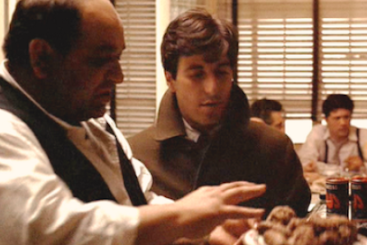
It all started with Pete Clemenza and The Godfather, a movie by Italian-American director Francis Ford Coppola. Yes, I guess we can say it started with Francis. It was Francis Ford Coppola who wrote the Screenplay along with the author of the Best Selling Novel – The Godfather, Mr. Mario Puzo, also an Italian-American. Coppola was the co author of The Godfather Screenplay along with Puzo. And it was Coppola who was the films director and decided what would be in the film and what wasn’t.
Coppola brilaintly sets the scene of Sonny Corleone meeting with his Capo’s and other Corleone Crime Family associates, discussing strtegies of their next moves after Virgil Sollozzo puts out a hit on Sonny’s father, Don Vito Corleone (Marlon Brand). The attempted assasination of Vito Corleone fails, and Vito Corleone is still alive, as his son Santino (Sonny) becomes the acting Boss of the Corleone Crime Family.
As Sonny and his cronies discuss what to do, sitting around eating Chinese Food, his Capo, Peter Clemenza is making a pot of Italian Sunday Sauce Gravy with Sausages & Meatballs. Sonny’s younger brother Michael (Al Pacino) is in the room as well. He gets a call from his girlfriend Dianne, who ask Michael if she loves him. Michael doesn’t say it, but Clemenza being the smart old guy that he is, knows what has been said, and says, “Why don’t you tell that nice girl you Love her. I Love you with all of my Heart. If I don’t again soon, I’ma gonna Die” Clemenza chuckles.
Clemenza continues cooking his Sauce, then says to Michael, “Come over here kid. Learn something. You never know when you’re gonna to cook for 20 guys someday? You see? You start out with a little oil. Then you fry some Garlic. Then you throw in some Tomatoes, some Tomato Paste, you fry it up. You make sure it doesn’t stick. You get it to a boil. You shove in all your Sausage, and your Meatballs. Add a little bit of wine. And a little sugar, and that’s my trick.”
Yes, Clemenza making Sunday Sauce and Meatballs was a favorite scene which just about everyone recalls and talks about, and for good reasons. It’s a great scene. But let us not forget some other scenes that included Italian food. At Connie Corleone’s Wedding, we have a Corleone associate throwing a Gabagool Sandwich to Paulie (watch the video below).
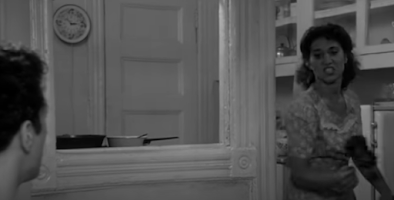
Also, let’s not forget Sonny tearing off a piece of Italian Bread, dipping it into the Sauce that Sonny’s mother has simmering on the stove. Then Sonny eats it. There are a couple scenes when the the wole Corleone Family is eating at the table. There’s the scene when Connie has cooked a meal for herself and her husband Carlo. One of Carlo’s girlfriends (Goomada) calls up asking for Carlo. Connie picks up the phone, then her and Carlo start fighting.
Another memorable scene that involved Italian Food was the meeting between Michael, Virgil Sollozzo, and Captain McCluskey at Louie’s Italian Restaurant in the Bronx. The three of them are sitting around the table when McCluskey asked Sollozzo, “How the Italian Food in this Restaurant?”
Sollozzo replies, “Get the Veal. It’s the best in the City”
Michael Corleone goes into the bathroom, and gets the gun that is planted for him inside the bathroom, above the toilet. Michael comes back out into the dining room and shoots and kills both Sollozzo and Captain McCluskey. The calmly drops the gun, and walks out of the restaurant.
In the annals of Italian Food in movies, Stanley Tucci’s Big Night is way up near the top. Some would probably put it on the top of their list. Yes when it comes to Italian Food in movies, Big Night is a heavyweight. The movie centers around two brothers from Italy, in their Italian Restaurant on the Jersey Shore, Louis Prima, and a monumental dish of Southern Italy, known as a Timpano (aka Timballo).
The brothers restaurant is not doing that well financially. The food is very good, but this is the 1950s, and the locals don’t get Chef Primo’s authentic Italian Food. When a fellow (rival) restaurant owner tells brothers Scondo (Stanley Tucci) and Primo that he knows the famous Sicilian-American singer Louis Prima, and that he is going to get him to come to the brothers restaurant, this get the ball rolling on a very special dinner hosted by the brothers, featuring Chef Primo’s wonderful food, and the centerpiece of the meal, The Timpano, a luxurious dish made of baked maccheroni, meats, sauce, and cheeses stuffed into a dough shell that’s baked in a pan called a “Timpano” by which the dish gets his name.
The movie stars Stanley Tucci as Secondo, Tony Shaloub as Primo, Secondo’s brother, Isabella Rossellini as Gabriella, with Minnie Driver, and Marc Anthony as the busboy.
The wonderful music, fine cast, and the scenes preparing the Timapno and other dishes is superb, and it’s these scenes that captivated audiences, and inspired to make their very own Big Night Style Italian Dinner Parties. The rest is history, and people still talk about Big Night, the Timpano, and wonderful Italian Dinner.
Johnny (Frank Pelligrino Sr,) & Vinny (Charlie Scorsese)
DINNER in PRISON
GOODFELLAS
There are several Italian Food scenes in Martin Scorsese’s Goodfellas, a true life story of factions of the New York Mafia members and associates, based on Nick Pellegi’s book Wiseguy. Of course the most famous food scene is when Henry (Ray Liotta) is in Prison with Vinny (Charlie Scorsese), Johnny Dio, and “Big Paulie” (Paul Sorvino). Viiny is making the Sunday Sauce Italian Gravy with Meatballs and Pork Neck, as Johnny Dio cooks up some Steaks. The scene is quite memorable, and people talk about it all the time, especially the way Paul Sorvino shaves the Garlic “Ravor Thin” with a ravor, and Big Paulie telling Vinny, “Vinny don’t put too many Onions in the Sauce.” You gotta just Love it?
The scene with Henry making Veal Scallopine and his brother stirring “The Sauce” is memorable as well.
So if you Love Movies, Italian Food, and Italian Food in movies, there’s a good chance you already know these films and the Food Scenes in them, and if you’re like me, you talk about them, and watch the movies over and over again. When you’ve got something good, you stick with it. And that’s The Godfather, Coppola and Pacino, Clemenza and his Sauce. Big Night Stanley Tucci and The Timpano, and Marty Scorsese’s Goodfellas, Robert DeNiro, The Prison Sauce, and the main character Henry Hill, and the late great Ray Liotta, who turned in such a great performance, he was even better than DeNiro. “Yes he was.”
Watch the movies, enjoy, make a Sunday Sauce, and listen to Sinatra. What’s better than that?
This dish focuses on a “quick” sauce that tastes of fresh tomatoes rather than a long-simmered “gravy.” Patsy’s Italian Restaurant in NYC was where Sinatra famously kept a private table.
RECIPE “FRANK’S TOMATO SAUCE”
Ingredients:
1 lb Spaghetti
1 (28 oz) can Whole Peeled Tomatoes (preferably San Marzano), crushed by hand
1/4 cup Extra-Virgin Olive Oil
4–6 cloves Garlic, peeled and lightly smashed
Handful of Fresh Basil Leaves, torn
Kosher salt and black pepper to taste
Optional: Pinch of red pepper flakes
Instructions:
Infuse the Oil:Heat olive oil in a large skillet over medium heat. Add the smashed garlic cloves and sauté for 2–3 minutes until golden brown.Sinatra’s Rule:Remove the garlic once it’s golden to leave only a subtle infusion.
Start the Sauce: Carefully add the hand-crushed tomatoes and their juices to the oil. Add red pepper flakes if using. Simmer on medium-low for about 15–20 minutes, stirring occasionally, until the sauce slightly thickens but remains bright red.
Cook Pasta: While the sauce simmers, cook spaghetti in a large pot of heavily salted boiling water until al dente (firm to the bite).
Finish & Emulsify: Reserve 1/2 cup of pasta water, then drain the spaghetti. Add the pasta directly into the sauce skillet.
Toss: Add the torn basil and a splash of the reserved pasta water. Toss vigorously over medium heat for 1 minute until the sauce coats every strand. Serve immediately.
Fettuccine à la Sinatra
This is a decadent, Alfredo-style preparation that Sinatra often requested. It is defined by its simplicity—no flour or thickeners, just high-quality dairy and cheese.
Prep time: 5 mins | Cook time: 15 mins | Servings: 4
Ingredients:
1 lb Fettuccine (fresh is best if available)
1/2 cup (1 stick) Unsalted Butter, softened
1 cup Heavy Whipping Cream
1 cup Parmesan Cheese, very finely grated
Salt and freshly cracked black pepper
Fresh parsley for garnish
Instructions:
Boil Pasta: Cook fettuccine in salted water until just al dente.
Melt & Blend: While the pasta cooks, melt the butter in a large saucepan over low heat. Be careful not to let it brown.
Create the Base: Slowly whisk in the heavy cream. Simmer gently for 2–3 minutes until slightly thickened, but do not let it reach a rolling boil.
Add Cheese: Gradually whisk in the Parmesan cheese until the sauce is smooth and velvety. Season with salt and a generous amount of black pepper.
Combine: Drain the pasta and add it to the sauce. Toss gently to coat.
Rest & Serve: Remove from heat and let the pasta sit, covered, for 2 minutes—this allows the noodles to absorb the sauce. Garnish with parsley and serve on warm plates.