RECIPES
Author Daniel Bellino Zwicke – Writing in a New York Cafe
Seeing Daniel Bellino-Zwicke at a café feels like a scene straight out of one of his own books. As a writer who practically lives and breathes the atmosphere of Greenwich Village and the storied cafés of Italy, he is often found capturing the essence of “The Good Life” (La Dolce Vita) over an espresso or a glass of wine.
The Vibe of a Bellino-Zwicke Writing Session
If you’ve spotted him with a notebook or laptop, he’s likely weaving together his signature blend of culinary history, personal anecdote, and Italian-American culture. His writing style is conversational and evocative, often making the reader feel like they are sitting right across the table from him.
What He Might Be Working On:
-
Sunday Sauce & Secret Recipes: He is best known for Sunday Sauce and Segreto Italiano, books that treat recipes as sacred family oral histories.
-
Travel Journals: He frequently writes about his adventures in Venice, Rome, and Sicily, focusing on the small, authentic bars and trattorias that tourists often miss.
-
Pop Culture Narratives: From The Big Lebowski Cookbook to stories about Sinatra and Scorsese, he often explores the intersection of food and iconic cinema.
NOTABLE WORKS by Daniel Bellino Zwicke
SUNDAY SAUCE. – The Definitive Guide to Italian-American “Gravy” aka Sunday Sauce,
and ITALIAN FAMILY Traditions
The FEAST of The 7 FISH – A deep dive into the Classic Italian-American Christmas Eve Seafood
Feast – Recipes
GRANDMA BELLINO’S ITALIAN COOKBOOK – Italian Heritage Recipes of author Daniel
Daniel Bellino’s Z’s Sicilian Nonna
NONNA BELLINO
La TAVOLA – Italian-American New Yorkers Adventures of The Table. Blending the Joy of Travel Cooking and Eating Italian-Food
Bellino-Zwicke doesn’t just write about food; he writes about the feeling of a place. Whether he’s at a small zinc bar in Paris or a corner spot in the Village, the café is his natural habitat—a place to observe the world and translate it into “the secret sauce” of his next chapter.
Veal Milanese alla Sinatra – Recipe Daniel Bellino Zwicke – Sinatra Sauce The Cookbook
INGREDIENTS
- 2 cups Bread Crumbs (Plain)
- 2 tablespoons freshly grated Parmigiano-Reggiano
- 1/4 cup minced flat-leaf parsley
- 1 cup plus 3 tablespoons olive oil
- 1/4 teaspoon salt
- 1/8 teaspoon freshly ground black pepper
- 1/2 cup all-purpose flour
- 2 large eggs, beaten
- 4 veal cutlets (about 1 1/4 pounds), pounded thin to slightly less than 1/4 inch
- Salt and freshly ground black pepper to taste
- 1 lemon, cut into 8 wedges

Bellino and Pacino – Al Pacino Favorite Pasta
“BELLINO & PACINO”
Daniel Bellino is an Italian-American author who highlights Al Pacino in his cookbooks, particularly focusing on Italian-American cooking, “Sunday Sauce” (meat-based Red Sauce), and shared Sicilian roots, Bellino’s family from Lercara Friddi, Sicily, and Al Pacino – “Believe It or Not” hails from Corleone, Sicily.
Bellino’s books, such as Grandma Bellino’s Cookbook, discuss recipes like Spaghetti Aglio e Olio, which is noted as a favorite of Al Pacino.
Daniel Bellino’s Connection: Daniel Bellino Zwicke is known for writing books about Italian-American life, food, and culture. He features “Sunday Sauce” and mentions Sicilian-American connections.
Daniel writes in his book of the times when he was the Wine Director of Barbetta Ristorante in New York, where Pacino occasionally dined at. When Daniel was taking Mr. Pacino’s food order, Al would always ask if the kitchen would make him Spaghetti Aglio e Olio (Spaghetti with Garlic & Olive Oil). “The dish was not on the menu, that why Al asked if we could make us. It was an offer we couldn’t refuse,” states Bellino. And of course we always made it for Al, and he was a wonderful client to have dining with us.” The rest is history, shall we say. Al Pacino’s favorite paste was Spaghetti with Garlic & Oil (Aglio e Olio). We know this thanks to Daniel Bellino, who felt with Pacino first hand. Bellino tells this story in his book Sunday Sauce
- Al Pacino & Pasta: In his book Grandma Bellino’s Italian Cookbook – Bellino features a “Spaghetti Aglio e Olio” recipe that he associates with Al Pacino. While Pacino is of Sicilian descent, this specific garlic and oil dish is commonly known as a Neapolitan specialty.
- Sunday Sauce: Bellino’s recipes, often termed “Sunday Sauce alla Bellino alla Pacino,” highlight traditional, slow-simmered sauces featuring meat such as meatballs, sausages, and pork braciola.
- Key Themes: Bellino’s work often highlights connections between famous Italian-Americans (like Pacino and Sinatra) and the culinary traditions of New York and New Jersey Italian-American communities.
- Related Works: Other books by Bellino-Zwicke include Sinatra Sauce: Meatballs & Merriment.
Al Pacino and Aglio Olio you ask? What about it? Well it’s just that Spaghetti Aglio Olio always reminds me of that great fellow New Yorker Sicilian American, the one-and-only Al Pacino from da Bronx. It’s not a big deal, just a wonderful little memory for me. When I was the Wine Director at the famed Barbetta Ristorante on Restaurant Row in New York’s Theater District (where Al often performs on stage), Al Pacino used to come and eat there every now and then. He never wanted anything to fancy, but something that just about all true blooded Italian-American wants, and that dish is Spaghetti Aglio Olio, plain and simple, yet it’s in our blood. That’s what Al wanted and that’s what we gave him, and Al loved it and you will too.
Note: As has already been noted, you can make Spaghetti w/ Garlic & Oil, simply by making the above recipe, and omitting the Anchovies, and you’ll have it just like Al Pacino does.
Enjoy!
Excerpted form GRANDMA BELLINO’S ITALIAN COOKBOOK
by Daniel Bellino Zwicke
.
DiMaggio and Bellino – Joltin Joe DiMaggio
DiMAGGIO & BELLINO
features Joe DiMaggio and his family’s culinary traditions in his Italian-American cookbook, SUNDAY SAUCE. The book highlights recipes like “Mamma DiMaggio’s Sunday Gravy,” honoring the mother of the legendary Yankee Clipper, Joe DiMaggio.
- Connection: Daniel Bellino-Zwicke, a cookbook author and former restaurant professional, highlights Joe DiMaggio as a key figure in Italian-American culture in his books.
- “Sunday Sauce”: In his book Sunday Sauce, Bellino-Zwicke includes recipes for classic Italian-American dishes, featuring stories and recipes from famous figures, including Joe DiMaggio.
- “Mamma DiMaggio’s Gravy”: The book specifically includes a recipe for “Mamma DiMaggio’s Sunday Gravy,” which is a nod to Joe DiMaggio’s mother, Rosalia, and the traditional Sunday meals of Italian-American families.
- Other References: Bellino-Zwicke often highlights famous Italian-Americans like DiMaggio, Frank Sinatra, and Tony Bennett in his work, celebrating the culture and food of Italian New York.
- Restaurateur: Founded Bar Cichetti in 1997, credited as the first Venetian-style bacaro (wine bar) in the United States.
- Influencer: Runs the successful Instagram page @newyork.italian, which has over 500,000 followers and celebrates Italian-American culture.
- Sunday Sauce: A bestseller focusing on Italian-American home cooking and “secret” family recipes.
- Grandma Bellino’s Italian Cookbook: A collection of traditional recipes from his Sicilian grandmother.
- Positano: The Amalfi Coast Cookbook & Travel Guide: His 2021 release that combines regional recipes with travel insights.
- The Sinatra Cookbook: Also known as Sinatra Sauce, featuring recipes and stories tied to Frank Sinatra’s favorite meals.
- The Big Lebowski Cookbook: Titled Got Any Kahlua?, this book features recipes inspired by “The Dude”.
- The Feast of the 7 Fish: A guide to the traditional Italian Christmas Eve seafood dinner.
- Travel: He continues to travel extensively through Italy, recently visiting Verona, Florence, and Lucca to gather material for his upcoming works.
- His books are widely available through major retailers like Amazon and
- ThriftBooks
Joe DiMaggio was one of the most recognizable and popular men in mid-twentieth century America. He was celebrated in song and literature as an iconic hero, and he was married, briefly, to the nation’s number one glamour girl. On March 16, 1999, the House of Representatives passed a resolution honoring him “for his storied baseball career; for his many contributions to the nation throughout his lifetime; and for transcending baseball and becoming a symbol for the ages of talent, commitment and achievement.”1
But first and foremost Joe DiMaggio was a ballplayer. Known as the Yankee Clipper, he was the undisputed leader of New York Yankees teams that won nine World Series titles in his 13-year career that ran from 1936 to 1951, with three years lost to duty in World War II. He was three times the American League’s Most Valuable Player and he holds what many consider to be the most remarkable baseball record of all, a 56-game hitting streak in 1941. As the son of immigrants, he was the embodiment of the American Dream, a rags-to-riches story played out in pinstripes.
Joseph Paul DiMaggio was born Giuseppe Paolo DiMaggio on November 25, 1914, in Martinez, California, 25 miles northeast of San Francisco. His parents, Giuseppe and Rosalia (Mercurio) DiMaggio, had settled there after emigrating from Sicily. After Joe was born they moved the family to San Francisco, where Giuseppe continued to work as a fisherman. Joe was the eighth of their nine children, one of five sons. Two of his brothers, Vince and Dominic, would also play in the major leagues.
Unlike two of his older brothers, Joe had no interest in joining his father on the fishing boat. Instead, he played for several amateur and semi-pro teams in baseball-rich San Francisco. It was 19-year-old Vince, who was then playing for the San Francisco Seals of the Pacific Coast League, who got Joe into professional ball. When the Seals found themselves in need of a shortstop near the end of the 1932 season, Vince convinced Seals manager Ike Caveney to give his 17-year-old brother a chance. Joe played in the final three games of the season, and then was signed to a contract in 1933 for $225 a month.
Moved to the outfield because of his erratic arm, DiMaggio hit .340 and set a PCL record by hitting in 61 straight games. In 1934, he hit .341, but a knee injury that sidelined him in August made major-league teams leery of signing him. The Yankees offered to buy his contract for $25,000 and five players, but with the contingency that he remain with the Seals in 1935 to prove he was healthy. DiMaggio made a convincing case by hitting .398, with 34 homers and 154 runs batted in.
In 1936, only two years after the departure of Babe Ruth, the heralded rookie came to spring training facing big expectations. Writing in The Sporting News on March 26, Dan Daniel noted, “Yankee fans regard him as the Moses who is to lead their club out of the second-place wilderness. . ..” It didn’t take long for the rookie to make his mark. Halfway through the season, when he was hitting around .350 and had started in right field in the All-Star Game, his photo was on the cover of Time magazine. For the year he hit .323 with 29 homers and drove in 125 runs.
DiMaggio was the classic five-tool player; in addition to hitting for average and power, he could run, throw, and field. Joe McCarthy, the Yankees manager from 1931 to 1946, called him the best base runner he ever saw. His all-around play led the 1936 Yankees to the first of four straight World Series titles. The 21-year-old sensation had established himself as the successor to Babe Ruth. After the Series, he received a hero’s welcome in his home town of San Francisco, where Mayor Angelo Rossi gave him the key to the city.
DiMaggio finished second in the MVP vote in 1937, despite leading the American League in home runs, slugging percentage, runs, and total bases. He won the first of his three MVP Awards in 1939, when he led the league with a career-best .381 average. Following that season, he married 21-year-old Dorothy Arnold, a singer, dancer, and actress he met while filming a bit part in the movie Manhattan Merry-Go-Round.
By then the 6-foot-2, 190-pound outfielder was acknowledged as the best player in baseball, but to some his ethnic background was still ripe for stereotypical portrayal. In a cover story in the May 1, 1939 issue of Life magazine, Noel Busch identified DiMaggio as a “tall, thin Italian youth equipped with slick black hair” and “squirrel teeth.” But the young ballplayer apparently confounded Busch’s general perception of Italian Americans. “Although he learned Italian first, Joe, now twenty-four, speaks English without an accent and is otherwise well adapted to most U.S. mores. Instead of olive oil or smelly bear grease he keeps his hair slick with water. He never reeks of garlic and prefers chicken chow mein to spaghetti.”3
After winning a second consecutive batting title in 1940, DiMaggio reached a new level of fame in 1941. He set one of the most enduring records in sports by hitting in 56 consecutive games. On May 15, the day the streak began, the Yankees were in fourth place, and DiMaggio had batted a lowly .194 over the previous 20 games. On June 17, DiMaggio broke the Yankee hitting-streak record of 29 games, set by Roger Peckinpaugh in 1919 and equaled by Earle Combs in 1931.
One of those rare athletes — like Babe Ruth and Muhammad Ali — who transcended the world of sport, DiMaggio has been called by more than one writer the last American hero. Revisionist historians later offered a more nuanced view, portraying him as a flawed hero who became increasingly reclusive and suspicious of others. Nevertheless, when he died his enduring status as a cultural icon was confirmed by an outpouring of adulation which few public figures, in any walk of life, could evoke. His death was front-page news in every major newspaper, was covered extensively on television newscasts and specials, and was the cover story in Newsweek magazine. Referring to the frequent bulletins on DiMaggio’s health that had been issued in the months prior to his death, Frank Deford wrote that it was “as if he were some great head of state.”25 As one Brooklyn native put it, DiMaggio “epitomized an era when, for a lot of us, baseball was the most important thing in life.”
The answer to Paul Simon’s question — Where has Joe DiMaggio gone? — remains the same: Nowhere. He remains firmly lodged in the American consciousness as a stylish symbol of a time when baseball was the undisputed national pastime and America was enjoying unprecedented prosperity. On April 25, 1999, two months after his death, DiMaggio’s monument was unveiled in Yankee Stadium’s Monument Park, joining those honoring Miller Huggins, Lou Gehrig, Babe Ruth, and Mickey Mantle. The inscription reads, in part, “A Baseball Legend and An American Icon.”
JOE DiMAGGIO – CAREER MAJOR LEAGUE BASEBALL STATS
GAMES PLAYED 1,736
LIFETIME BATTING AVERAGE. .325
HITS. 2,214
HOME RUNS. 361
RUNS BATTED IN (RBI) 1,537
On-BASE PERCENTAGE (OBP). .398
SLUGGING PERCENTAGE. .579
On-BASE PLUS SLUGGING .977
- 3× American League MVP: 1939, 1941, and 1947.
- 13× All-Star: Selected in every season he played.
- 9× World Series Champion: 1936–1939, 1941, 1947, and 1949–1951.
- 2× AL Batting Champion: 1939 (.381) and 1940 (.352).
- 2× AL Home Run Leader: 1937 and 1948.
- 2× AL RBI Leader: 1941 and 1948.
- MLB Record Hitting Streak: Hit safely in 56 consecutive games from May 15 to July 16, 1941.
- Hall of Fame Induction: Inducted in 1955.
- 1937: Led the league in home runs (46) and runs scored (151), batting .346 with a career-high 167 RBI.
- 1939 (First MVP): Career-high .381 batting average with 30 HR and 126 RBI.
- 1941 (Record Streak): Batted .357 with 30 HR and 125 RBI; set the 56-game hitting streak record.
- 1943–1945: Missed three seasons of his prime while serving in the U.S. Army Air Forces during World War II.
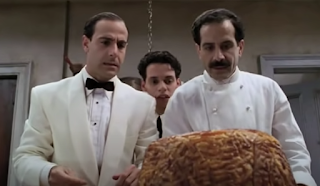
Italian Food in The Movies – with Recipes – Goodfellas The Godfather = Big Night
“BIG NIGHT”
Sinatra Pasta – Recipe – Tomato Sauce alla Sinatra
“SPAGHETTI POMODORO”
- Ingredients:
- 1 lb Spaghetti
- 1 (28 oz) can Whole Peeled Tomatoes (preferably San Marzano), crushed by hand
- 1/4 cup Extra-Virgin Olive Oil
- 4–6 cloves Garlic, peeled and lightly smashed
- Handful of Fresh Basil Leaves, torn
- Kosher salt and black pepper to taste
- Optional: Pinch of red pepper flakes
- Instructions:
- Infuse the Oil: Heat olive oil in a large skillet over medium heat. Add the smashed garlic cloves and sauté for 2–3 minutes until golden brown. Sinatra’s Rule: Remove the garlic once it’s golden to leave only a subtle infusion.
- Start the Sauce: Carefully add the hand-crushed tomatoes and their juices to the oil. Add red pepper flakes if using. Simmer on medium-low for about 15–20 minutes, stirring occasionally, until the sauce slightly thickens but remains bright red.
- Cook Pasta: While the sauce simmers, cook spaghetti in a large pot of heavily salted boiling water until al dente (firm to the bite).
- Finish & Emulsify: Reserve 1/2 cup of pasta water, then drain the spaghetti. Add the pasta directly into the sauce skillet.
- Toss: Add the torn basil and a splash of the reserved pasta water. Toss vigorously over medium heat for 1 minute until the sauce coats every strand. Serve immediately.
- Fettuccine à la Sinatra
- This is a decadent, Alfredo-style preparation that Sinatra often requested. It is defined by its simplicity—no flour or thickeners, just high-quality dairy and cheese.
- Prep time: 5 mins | Cook time: 15 mins | Servings: 4
- 1 lb Fettuccine (fresh is best if available)
- 1/2 cup (1 stick) Unsalted Butter, softened
- 1 cup Heavy Whipping Cream
- 1 cup Parmesan Cheese, very finely grated
- Salt and freshly cracked black pepper
- Fresh parsley for garnish
- Instructions:
- Boil Pasta: Cook fettuccine in salted water until just al dente.
- Melt & Blend: While the pasta cooks, melt the butter in a large saucepan over low heat. Be careful not to let it brown.
- Create the Base: Slowly whisk in the heavy cream. Simmer gently for 2–3 minutes until slightly thickened, but do not let it reach a rolling boil.
- Add Cheese: Gradually whisk in the Parmesan cheese until the sauce is smooth and velvety. Season with salt and a generous amount of black pepper.
- Combine: Drain the pasta and add it to the sauce. Toss gently to coat.
- Rest & Serve: Remove from heat and let the pasta sit, covered, for 2 minutes—this allows the noodles to absorb the sauce. Garnish with parsley and serve on warm plates.
Books about Frank Sinatra – Biographies and Cookbook
Drawing on recently released secret files, an astonishing look at the extent to which Frank Sinatra’s life and career were inextricably linked with the Mafia, and how a number of innocent people died, simply because they knew Sinatra, or had upset him.
It was said of the young Frank Sinatra that he came across as ‘St Francis of Assisi with a shoulder holster’. In Frank Sinatra and the Mafia Murders, Mike Rothmiller and Douglas Thompson draw on previously secret Los Angeles Police intelligence files, a cache of FBI documents released to the authors in 2021 and extensive interviews with prime sources, including many who worked with Frank Sinatra and many more who tracked his long and fatal association with the American Mafia, notably his ongoing connection, after his original godfather was assassinated: Sam ‘Momo’ Giancana, who shared a lover with President John F. Kennedy.
Sixteen days after the assassination of John F. Kennedy on 30 November 1963, nineteen-year-old Frank Sinatra Jr. was kidnapped at gunpoint from his hotel room in Lake Tahoe, Nevada. A $240,000 ransom was demanded from his father. While the FBI and Nevada and California law-enforcement agencies sprang into action, Frank secretly contacted his Mafia friends for help. The Mafia believed they could free young Frank much more quickly through their underworld connections. Some of those they questioned died.
Revealed here as never before is the extent to which Sinatra was adopted by the Mafia. They promoted his career and ‘watched his back’ and, in return, Sinatra danced to their tune. New information disclosed here shows that Sinatra also offered to spy for the CIA. Inside sources say Sinatra wanted the CIA to intercede to stop an investigation into his gaming licence in Las Vegas. But the CIA declined because they were already working with the Mob and were concerned Sinatra would learn of the Mafia’s connection to the CIA and leak it.
SINATRA SAUCE “Music Meatballs & Merriment”
Daniel Bellino Zwicke
Sinatra Sauce “Music Metaballs & Merriment” and Living The Good Life. “Like Frank” .. Yes, it’s about Frank. That is one Francis Albert Sinatra, the Greatest Singer of The 20th Century, and Icon of American, especially of the Italian-American Enclave in America. Frank Sinatra was many things, first and foremost a Great Italian-American singer, Love & Adored by Millions. Mr. Sinatra was also an actor, citizen, and Entertainer Par Excellence. Yes this book is about those things, Frank Sinatra : the incomparable singer, actor, recording artist, Teen Idol of the 1940s, philanthropist, and Las Vegas & Nightclub Entertainer. He was like no other, Sinatra was one-of-a- kind, and he had a lust for life, “Hanging with Friends,” – sipping cocktails, with good food, and making good times. That’s what this book is about, Frank Sinatra, eating (Italian Food), enjoying a cocktail or two, and the company of family and friends. Yes, Frank Sinatra lived life to its fullest. He wouldn’t have it any other way, but “His Way.”
This book “Inspires” and gives you the tools to live out your Sinatra Dreams. You can make it reality, with recipes of Frank’s Favorite Italian Foods, Pasta, Meatballs, Posillipo, Eggplant Parm and more. Eating, drinking, and having good times, all the time as Frank did. Meals with friends and family. Meals you can cook, with recipes in this book. The info and recipes are all here in Sinatra Sauce. Read it, put on some Sinatra (music), cook, eat, and create memorable times at the table, just like Frank. That’s what this book is about: Sinatra, Family, Friends, and Good Times. “The Best is Yet to Come”
Visit SINATRA SAUCE – The Website @ https://sinatrasauce.com
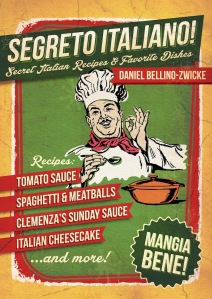
Author Daniel Bellino Zwicke is a lifelong Sinatra fan. He is a Best Selling author, who lives and writes in New York’s Greenwich Village. Daniel is currently working on several other projects. He has authored : Sunday Sauce, La Tavola, Mangia Italiano, Grandma Bellino’s Cookbook, Segreto Italiano, and Positano The Amalfi Coast – Travel Guide / Cookbook.
Recipes :
SINATRA TOMATO SAUCE
DOLLY’S MEATBALLS
EGGPLANT PARMIGIANA
CAPONATA
ARTICHOKES SICILIAN STYLE
ARANCINI (Sicilian Rice Balls)
MINESTRONE alla DOLLY
DINO’S PASTA FAZOOL
MACCHERONI al FORNO
SICILIAN LASAGNA
CHICKEN VESUVIO
VEAL MARSALA
STEAK – SINATRA’S WAY
MARTY’S SICILIAN MEATLOAF
FRANK’S ITALIAN CHEESECAKE
REGINELLA SICILIAN COOKIES
And Much More !!!
Sinatra Eats Italian Cookbook by Bellino
A Young Frank Sinatra …. Hoboken, New Jersey
.
Frank Sinatra
“Come Fly with Me” !!!
.
PATSY’S “Franks Favorite Restaurant”
Frank’s Favorite Restaurant in The World, was Patsy’s on West 56th Street in New York, in The Theater District near Times Square .. Frank’s Favorites were; Calms Posillipo, Spaghetti Pomodoro, Veal Milanes (extra Thin & Crispy) and Spaghetti & Meatballs of which patsy’s makes The Best in The City ..
.
.
FRANK’S FAVORITE ITALIAN BREAD
PARISI BAKERY MOTT STREET
LITTLE ITALY, NY NY
.
FRANKS FAVORITE PIZZA
PATSY’S in EAST HARLEM
No Relation to PATSY’S on 56th STREET
SINATRA at JILLY’S New York with Friends and Daughters NANCY and TINA
Frank loved going to his close Pal JILLY RIZZO’S New York Restaurant JILLY’S where Frank would eat Chinese Food, tell stories, and drink JACK DANIEL’S to the Wee Hours of the morning
Despite having served as an icon for high living for generations, Frank Sinatra was not a fan of haute cuisine. A high school drop-out from Hoboken, New Jersey, the only child of a father who was a lightweight boxer turned fireman and a political activist mother who ran an illegal abortion business that provided services for free, Sinatra even after his fame was established preferred simpler fare and cozier surroundings than were found in the five-star restaurants of the world. In New York he favored only a few establishments, none of them popular celebrity hang-outs (except for the celebrities invited by Frank). There was P.J. Clarke’s at 915 Third Ave., where Sinatra carefully scheduled his nights around those of gossip columnist Dorothy Kilgallen, whose favorite topic was anything going wrong in Sinatra’s life, especially if it concerned the disillusion of his relationship with actress Ava Gardner. Then there was PATSY’S at 236 W. 56th St., where Frank ordered the breaded veal and spaghetti with red sauce on the side. As a story goes, Sinatra found himself on the skids one Thanksgiving, without company and without plans. So he made a reservation at Patsy’s, which wasn’t open that day. But owner Pasquale Scognamillo scrambled his staff and family so that when Frank rolled in at 3pm, the place was full. Rocky Lee Chu-Cho Bianco at 987 Second Ave was where Frank would go for pizza, and if he wanted something a little more upscale, he hit the 21 CLUB over at 21 W. 52nd St., where the jacket and tie dress code was a lot less of an issue in the 1950s than it is now.
But above and beyond them all was his affection for Jilly’s Saloon. Born Ermenigildo Rizzo on May 6th, 1917, Jilly’s career in food services started early, when he worked for his father delivering Italian ice to cafés. He opened his first restaurant, JILLY’S SALOON , on West 49th Street but eventually moved it to a new location on West 52nd. It was this second incarnation of Jilly’s that attracted Sinatra’s attention. On any given night, Sinatra could be found at his regular booth surrounded by regular friends who received the call earlier in the day — having grown up an only child, Sinatra swore he would never dine alone. Jilly’s kitchen specialized not in Italian fare but in Cantonese food. Sinatra spent so much time there that Jilly Rizzo became Sinatra’s closest friend, his right-hand man, and his bodyguard.
Learn How to Make SINATRA SUNDAY SAUCE and MEATBALLS
Frank Sinatra with Jilly Rizzo and JACKIE “O”
By 1962 he and Jilly Rizzo were so close that Sinatra was securing bit parts for the saloon owner in films like The Manchurian Candidate. That same year, Sinatra and fellow Rat Packer Sammy Davis Jr. recorded the duet “Me and My Shadow,” which twice mentions ending up at Jilly’s. In Sinatra’s 1968 detective movie Lady in Cement, he pays tribute to his friend by naming a seedy Miami strip club Jilly’s. Also in 1968, Sinatra once again paid musical tribute to his favorite hang-out when, in the song “Star,” he crooned “If they’ve got a drink with her name in Jilly’s bar, the chances are the lady’s a star.”
Apart from being Sinatra’s throne room, Jilly’s was most famous as the spot where mobsters decided to murder television comedian Johnny Carson.
.
SUNDAY SAUCE
alla BELLINO alla PACINO
FRANK SAMMY & DEAN
And “JACK DANIEL” TENNESSEE WHISKEY
.
Recipe for SPAGHETTI & MEATBALLS alla SINATRA
.
Jack Daniel’s and Frank Sinatra
.
.

FRANK SINATRA with Cigarette & JACK DANIELS
SINATRA and Friends at JILLY’S , New York
.
.
Sunday Sauce alla Bellino alla Pacino
SUNDAY SAUCE
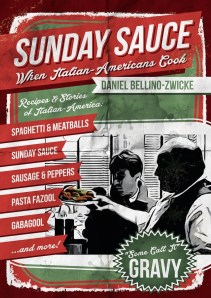
Daniel Bellino-Zwicke’s recipe for Sunday Sauce is a classic Italian-American gravy, featuring a long simmer time and a combination of meats
. His recipe is published in his book, Sunday Sauce: When Italian-Americans Cook.
- It celebrates the tradition of simmering a meat-based tomato sauce for several hours to create a rich flavor.
- An excerpt from his book notes that meat combinations often include sausages, meatballs, and beef braciole, though pork neck and veal shank are also possible additions.
- His book also includes recipes for famous movie-inspired sauces, such as Clemenza’s Sunday Sauce from The Godfather and Sinatra’s Spaghetti & Meatballs.
- Where to find the recipe
- The book: The full recipe is available in his cookbook, Sunday Sauce: When Italian-Americans Cook. This can be purchased from online retailers like Amazon, Barnes & Noble, and AbeBooks.
- Excerpts: Excerpts and summaries of the recipe’s approach and ingredients can be found on Daniel Bellino-Zwicke’s personal website and various food blogs.
- Inspired recipes: Since Bellino-Zwicke’s recipe is a classic version of the Italian-American Sunday Sauce, many similar recipes exist online, often referencing the same key elements, like a long simmer time and a combination of meats.
- General Sunday sauce preparation
- While the specific recipe is proprietary to Bellino-Zwicke’s book, the general method for this type of Sunday sauce, or “gravy,” is widely known. It involves:
- Adding aromatics like onion and garlic.
- Combining with tomatoes and other flavorings (such as tomato paste, wine, and herbs).
- Slow-simmering for several hours to allow the flavors to meld and the meats to become tender.
- The final sauce can then be served over pasta, with the cooked meat as a second course.
Sunday Sauce: When Italian-Americans Cook, doesn’t contain just one single recipe, but rather presents a variety of Sunday sauce traditions reflecting different family customs. The core difference between the recipes is typically the combination of meats used.
- A simpler sauce: For some, a simpler version of the sauce is made with just sausages and meatballs. This version is notably featured as Pete Clemenza’s sauce in The Godfather.
- Pork variations: Other families incorporate pork into their sauce. Some versions use pork neck, while Bellino-Zwicke mentions that he sometimes makes his Sunday sauce with sausages, meatballs, and pork ribs.
- Other meat options: The author notes that other meats can be added to the mix. Some families might include chicken thighs or a veal shank.
- “Secret Sauce”: The cookbook also includes a “Secret Sauce,” or Salsa Segreta, recipe. Inspired by the old-school Italian red-sauce joint Gino’s of Lexington Avenue, this version is distinct from the typical meat-heavy Sunday sauce.