A Waiter at GINO’S
“You’ve got to get Pasta Segrete”
Segreto?
It’s secret
in Italian. I got the idea for the book one day, well not the idea, but
inspiration I’d say. I was thinking about one of our all time favorites
restaurant, the food, the ambiance and all the fun we’d had there over the
years. Many wonderful meals with family and friend, no foes. Dinners with
Cousin Joe, Sister Barbara, Brother Michael, and Jimmy. Oh, the food was
wonderful, all the great Italian Classics of good old Italian-American Red
Sauce Joints of which this one, was one of the best. The classics, like: Baked
Clams, Stuffed Artichokes, Spaghetti & Meatballs, Linguine with Clam Sauce,
Chicken Parmigiano, Veal Marsala & Milanese, Chicken Cacctiatore, Ossobuco,
Cannolis, Spumoni, and-on-and-on. I think you get the picture. Lots of good,
affordable Italian Wine, the affable waiter, the phone booth, and the Zebra
Wall Paper. If you were a regular their, from the last sentence, you the place
I’m talking about. Yes Gino’s! Our beloved Gino’s of Lexington Avenue. Sadly
they closed a few years ago. But we still have the memories of so many festive
meals. Happy times, good eats.
I discovered the wonders of Gino’s and first
brought my cousin Joe there in 1999. The place was thrilling in that, when you
walked in, you felt you were in the perfect place. Gino’s is charged with
energy by its wonderful clientele, well-healed regulars who have been going
there for years, they know the Maitre’d, the waiters and other customers, and
likewise the waiters, bartender, and maitre’d know them. The first time you walk
in, you feel that, and want to be a part of it. We did. Back then, Joe and I
used to go out to eat together all the time, at least once a week. Joe knew
about food, but not to the extent that I did. Joe would come in every week or
so, and his driver would drive us around town. He’d pick me up early evening
for a night of feasting and good times. We’d often eat at a couple different
place. We’d have our main dinner and maybe a little bite to eat when we first
went for cocktails to start the night off. As I said, Joe loved eating, and
knew quite a bit, but as much as he knew, it wasn’t a third of what I knew
about food, wine, and restaurants, and especially the restaurant, bar, and
night club scene in New York. I was teaching Joe the ropes, so-to-speak, and Joe
was an eager student. We had quite a lot of fun those few years, with dinners
at Gino’s, Elio’s (Mondays for Lasagna), Da Silvanos’s, Bar Pitti, The Waverly
Inn, Minetta Tavern, cocktails at Pegu and Temple Bar, and way too many other
places to name right here. We did New York, we did it all!
Back to Gino’s. So I had passed by Gino’s any
number of times, but never went in to check it out. I was a downtown-er, and
that’s where we did most of our eating, with an occasional trip midtown or
other local if a place peaked our interest. So I did finally walk into Gino’s
one day. I had to check it out. When I did, as I’ve already said, I walked in
the door and immediately felt the energy of the place. Gino’s was packed, full
of life and vibrant, and I knew I wanted to be there. I didn’t eat there right
then and there, I was scouting the place out, but I knew I would be back. So I
called Joe up and told him all about the place. It sounded great to Joe, this
type of place was right up his alley, as it was mine. So Joe said yes, let’s
check it out on our next night out.
Our first ever trip to Gino’s was a few
nights later. Joe packed me up at my place in Greenwich Village. I got in the
car, as usual, we had a little discussion on what we’d be doing. We mapped out the
night of eating and drinking, good times. We talked and decided to head over to
Otto Enoteca for a bottle of wine and some Salumi before heading up town to
Gino’s and our main dinner of the night. Joe loved Otto, and I was a fan too,
so we headed to Otto.
Well, we went to Otto, drank a little wine,
had some Testa, Mortadella, and Prosciutto, and it was on to Gino’s. Back in
the car, and Ziggy (our driver) drove us up to Lexington Avenue, across the
street from Bloomingdale’s to Gino’s. We were excited as we walked up to the
restaurant and through the door. The place was packed and super-charged. We
loved it. The Maitre’d greeted us with the first of many warm welcomes. We were
in like Flynn. We sat down at a nice table in the middle of the restaurant. We
were happy campers. As happy as can be, for we sensed a wonderful meal ahead.
Our hunch would turn out to be just right. A waiter came to our table, greeted
us a warm welcome, gave us a wine list and menus, and asked what type of water
we wanted. As always, we got a bottle of flat water. Joe gave me the wine list
as he usually does and told me to pick something out. I looked over the
reasonably priced list and picked out a tried and true wine from my good friend
Luigi Capellini in Greve. The wine, a bottle of Verrazzano Chianti Classico.
The waiter went to get the wine, and Joe and I looked over the menu. We were
happy to see a great old school Italian menu. The Red Sauce kind of a good old
classic Italian-American joint, of which there used to be many, but at this
point of time, far fewer. They had; Shrimp Cocktail, Baked Clams, Hot
Antipasto, Clams Posillipo, Spaghetti Vongole, Lasagna, Canneloni, Veal Parm,
Veal Milanese, Eggplant Parmigiano, Shrimp Fra Diavolo, Veal Marsala, Scampi,
and all the usual suspects. We were in heaven, and it was heard narrowing down
what to eat.
One dish really caught our attention, and
especially Joe, who although I love my pasta, Joe had has me beat, he’s the
pasta freak. Freak in a good
way that is. The dish was Pasta Segreto (Pasta w/Secret Sauce), and us
intrigued.
The waiter brought the bottle of Chianti,
opened it, and we were on our way. I ripped off a piece of bread and ate it.
So, we decided on the menu. We order a Shrimp Cocktail and Baked Clams
Oreganata to start. We would share these two antipasto items, then move on to
the Primi, the pasta course. We decided on, and just had to have the Pasta
Segrete, a half order each. We both love Veal Milanese (Frank Sinatra’s
favorite), and as we were having antipasto, and pasta, as well as a couple
desserts, we decided on one Veal Milanese to split for the main course, thus
leaving room for some tasty desserts we knew Gino’s would have. We talked with
the our waiter about the menu, and he agreed that we had chosen wisely, and
that one Milanese would be fine, so we could eat dessert and he’d help us pick
the two best later.
So we drank wine, and nibble on the bread,
chatted and waited in anticipation for the antipasto to arrive. I love Shrimp
Cocktail since childhood and don’t always eat it all that much these days, so
it’s always a special treat. The Baked Clams and the Shrimp Cocktail came and
were a great way to start the meal. The wine was great. Hey it’s Castello
Verrazzano!
So now, we were really excited. This
mysterious Pasta Segreto was about to come out. You can get the Secret Sauce with whatever Pasta you
like, Spaghetti, Raviolis, Tagiolini, Penne, Gnocchi, or Rigatoni. Joe and I
both love Rigatoni, so that’s what we went for, two half portions of Rigatoni
Segrete. Well, the waiter brought us our Pasta with Secret Sauce. Guess what!
It was outrageous, we loved it. Joe went crazy, and could stop talking about
it, and it was just a couple weeks before he’d have to go back and get another “Fix.”
Yes the Pasta with the
Secret Sauce did not disappoint. We loved it, and would be back for many more
bowls.
We finished the Pasta, grudgingly so, as we
didn’t want the experience to end, “It was that good!” We waited a few minutes
for the Veal Milanese. It came out, and we could tell just by looking at it,
that it would be great. For those of you who might not know, Veal Milanese is
one of Italy’s most famous a classic of all dishes. It’s a Veal Chop that’s
pounded thin, breaded with breadcrumbs and fried and tipped with a Salad of
Arugala and Tomato. The dish is simple, simply delicious when done right. Veal
Milanese was one of Frank Sinatra’s all-time favorite dish, along with
Spaghetti Meatballs, and Clams Posillipo. Frank used to get it often at his
favorite of all restaurants, Patsy’s of West 56th Street, just 10
blocks from Gino’s. Both old-school Italian Joints were among Frank’s
favorites. Patsy’s was Frank’s # 1 favorite, but Gino’s wasn’t far behind, and
Ol’ Blue Eyes ate there many times over the years. Anyway, the Veal Milanese was
just perfect and we thoroughly enjoyed it. Yes, life is good at times like
these.
We finished our Veal Milanese, and it was
now time to think about desserts. I love sweets and so does Joe, so
he said we gotta get two. The waiter told us the Tiramisu was “The Best in
Town,” and the Cheesecake was really wonderful as well, so we went with his
suggestions. Throw in a couple cups of Espresso and some Anisette too, and we
were still in heaven.
Needless to say, our meal was fantastic. We
loved it. We loved Gino’s and would be back for more.
We went back to Gino’s a couple weeks
later. Joe loved the Pate Segrete and kept talking about it. He was back for
more. We loved the menu we had the last time, and pretty much went with the
same again. When we were eating the Segrete Pasta I identified the secret
ingredients. They were butter and Parmigiano, mixed into Gino’s basic tomato
sauce. Just a little butter and the grated Parmigiano does the trick for a
tasty sauce. The recipe is in the book, and don’t worry, we didn’t eat the same
thing every time we went to Gino’s. Over the years, we pretty much had every
dish on the menu, from; the Minestrone and Pasta Fagioli, Manicotti, Lasagna,
Spaghetti and Meatballs, Chicken Parmigiano, Veal Marsala and all. Specials
too! We ate it all. “And loved every minute of it.” Gino’s, we miss you so! But
great memories linger on.
Daniel Bellino Zwicke
EXCERPTED FROM :
SEGRETO ITALIANO – Secret Italian Recipes and Favorite Dishes
by Daniel Bellino Zwicke
GINO’S SECRET PASTA SAUCE
SECRET SALAD DRESSING
CREAMY ITALIAN
CAESER SALAD
LASAGNA
MARINARA SAUCE
JERSEY SHORE CRAB SAUCE
CU.CUZZA
SICILIAN FIG COOKIES
And More ….
SEGRETO ITALIANO Reviews
Steven S. says :
There is something very authentic about this book and the author Daniel Bellino-Zwicke. Entertainingly straight-forward and real, this cookbook has an awesome Italian American vibe throughout from cover to cover. Use this cookbook to create a dining experience that will make spectacular memories of comfort and deliciousness!
Italian and Italian-American cuisine is one of my favorites and it is just a blast trying out these rocking recipes in my own kitchen. These really are some secrets from the masters because they are uniquely wonderful – just created the Eggplant Caponata to the delight of my friends and family!
If you love Italian American food and like to cook and impress your Soprano’s fans, then pick up this book now!
Salsa Segreto
Outside The Old GINO RESTAURANT
Lexington Avenue
NEW YORK , NY
One block north of Bloomingdale’s famous department store. Gino Restaurant, which all the regulars called Gino’s was one of the greatest most beloved Italian Restaurants in the history of New York City. And it’s just that, part of New York City History. Sadly, we lost Gino’s nine years ago, as the restaurant sold its last plate of its famous “Pasta Segreto” in the Winter of 2010. Some of Gino’s many regulars which included the likes of Frank Sinatra were brought to tears the day Gino shut its doors. The restaurant was truly one of those much beloved places that you don’t see every day, and it’s a dam shame we lost her. All of us who ever went there have many cherished memories spent with friends and family at Gino’s. I’m sure if Frank Sinatra was still alive, he’d tell you a few stories himself. Maybe his daughters Tina and Nancy Sinatra who of course are still alive might have some memories of their father, the great Francis Albert Sinatra holding court at Gino’s. Yes we all know that Patsy’s across town from Gino’s was Frank’s favorite Italian Restaurant o f all-time, but Mr. Sinatra loved Gino’s as well, and dined there many times.
Hey Tony Bennett who is till alive, is a fan of Gino’s. Maybe he can tell us some stories. Well, best selling Italian Cookbook author Daniel Bellino Zwicke is alive and doing well, and always writing about Italian Food, restaurants, pizza, pasta, celebrities, and Italy, and he has told us a few stories of great times with friends and family; his Cousin Joe, Brother Michael, and sister Barbara, and his fond memories of eating Baked Clams, Rigatoni Segreto and Veal Milanese, which Daniel says was his typical dinner when he dined at Gino’s with Cousin Joe Macari (Macari Vineyards).
Yes Gino’s was one great restaurant, that saw the likes of Mike Wallace, Gregory Peck, Gay Talese, and Italian Bombshells Sophia Loren and Gina Lollibrigida. The great things about Gino’s was that it was a well-rum machine, and its total mix of wonderful expertly prepared Italian Food, lively ambiance, excellent service, and cool vibrant crowd made for the most perfect mix that was Gino Restaurant. And if that wasn’t enough, the prices of the food and wine was most reasonable. This was just another added plus of this legendary New York restaurant. And the restaurant that Gino’s was, as shall tell you that the type of restaurant it was what we now call Old School Italian Red Sauce Joints. Yes, an old school Italian Red Sauce Joint, and the best old school Italian restaurant that any could ever possibly be. The same as places like John’s of 12th Street, Monte’s Trattoria in Greenwich Village, Rao’s, up in East Harlem, New York. Like any Red Sauce worth its Salt, Gino’s had great Red Sauce of course, with items like, Baked Clams, Spaghetti Meatballs, Manicotti, Lasagna, Veal and Chicken Parm, and Frank Sinatra’s favorites; Clams Posillipo and Veal Milanese.
We morn the passing of Gino Restaurant, as we morn the closing of two other great Old School Italian eateries of DeRoberti’s Italian Pastries and Lanza’s Restaurant, both of which were on 1st Avenue two doors from one-another on the block of 1st Avenue between East 10th and 11th Streets in New York’s East Village, which years ago was simply known as the Lower East Side. Luckily the other famous old Italian Eatery, “John’s of 12th Street” is alive-and-kicking after more than 110 years in business in the old Sicilian neighborhood where Mob Boss Charle’s Lucky” Luciano grew up (born in Lercara Friddi) after his family moved to East 10th Street (# 265) from Sicily.
SINATRA SAUCE
The COOKBOOK
COOK & EAT LIKE FRANK
His FAVORITE ITALIAN RECIPES
SINATRA !!! “JUST BECAUSE” !!!
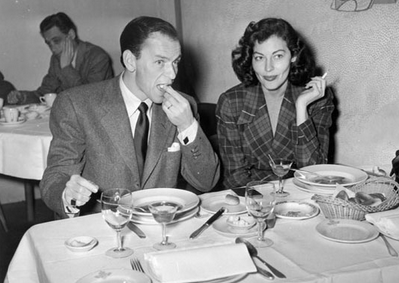
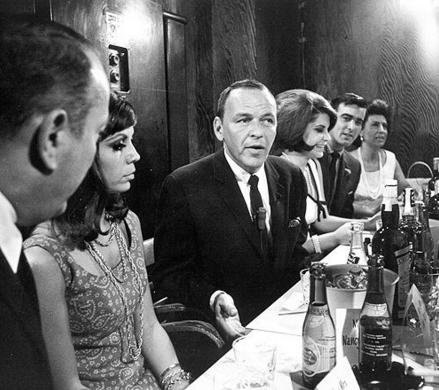
FRANK SINATRA – DINNER at “JILLY’S” NYC
With Daughters TINA & NANCY SINATRA
And FRIENDS
No, it’s Not GINO’S but although FRANK Ate there Many TIMES
and it was one of his All-Time FAVORITE ITALIAN RESTAURANTS
there aren’t any pictures of him there. So we put this in. “It’s a great shot
of Frank holding courts.”
#LuckyLUCIANO PASTA
GINO’S CELEBRITY CLIENTELE
Frank Sinatra
Rocky Marciano
Jackie Kennedy
Aristotle Onassis
Ed Sullivan
PerryComo
Gay Talese
Tony Bennett
Gregory Peck
Gene Tierney
PELE
David Suskind
Mike Wallace
Dan Rather
Gina Lollibrigida
Sophia Loren
Nicholas Pileggi
Nora Ephron
Ralph Lauren
Mel Ott
Other Facts
GINO RESTAURANT was named after owner Gino Circiello. Gino’s partner was Guy Aventuriero. They were both born in Capri, Italy.
The tow partners Gino and Guy financed their restaurant (Gino’s) with their own money, along with help from Franco Scalamandre who owned the Scalamandre (Wallpaper and Fabrics).
The famous Zebra wallpaper was designed by Flora Scalamandre.
Gino’s most famous dish was Pasta with Salsa Segreto (Secret Sauce)
GINO’S BAR
And ZEBRA WALLPAPER
Dinner at GINO’S of CAPRI
NY NY
Gino Circiello is 2nd from Left
Guy Aventuriero far Right
.











 New York Italian