Stanley Tucci in Tuscany – Watch the Fulle Episode Here !


TUSCANY

The COUNTRYSIDE


TUCCI in TUSCANY

FULL EPISODE !!!

STANLEY TUCCI “In TUSCANY”

WATCH The FULL EPISODE HERE !!!


PONTE VECCHIO

And The ARNO RIVER

FLORENCE


GOING to The AMALFI COAST ?


POSITANO The AMALFI COAST

TRAVEL GUIDE – COOKBOOK


Old School Italian New York


MANGNARO’S GROSSERIA ITALIANA

Was on 9th Avenue in New York’s HELLS KITCHEN

Sadly, they CLOSED after 100 YEARS in Business 


TONY with MICHAEL LOMANACO

At MAGNARARO’S ITALIANA

MANGANARO’S

Sadly, “They Are Gone”


MANGANARO’S GOSSERIA ITALIANA, 
was on 9th Avenue in NEW YORK’S HELLS KITCHEN

The neighborhood where Sylvester Stallone was born, and where author Mario Puzzo wrote the Best Selling Novel “The Godfather” as well as the screenplay to the movie.


Manganaro’s Grosseria Italiana, commonly referred to as Manganaro’s, was an Italian market and deli on Ninth Avenue in the Hell’s Kitchen neighborhood of Manhattan, New York City. It opened in 1893 and operated for 119 years, helping to introduce the hero sandwich to Americans. The family closed the business and put the property up for sale in 2012.

The business was founded in 1893 by Ernest Petrucci as a wine and spirits store, Petrucci’s Wines & Brandies, that also sold groceries. Its location at 488 Ninth Avenue near 37th Street was on a stretch of the avenue that remained lined with exotic food stores for decades. After the enactment of Prohibition in the U.S. in 1919, Petrucci’s nephew James Manganaro, an immigrant from Naples, took over the store in the 1920s and changed the name; in 1927 he was able to buy the building. Manganaro may have invented the hero sandwich, and played a role in introducing it to Americans.

On his death in 1953, Manganaro’s passed to his brother Louis and sister Nina Manganaro Dell’Orto and their spouses; in 1955, with a publicity agent’s help, they invented the six-foot “Hero-Boy” sandwich, which was successful enough for one of Dell’Orto’s four sons to go on the original version of the TV quiz show I’ve Got a Secret, and for the family to open a sandwich shop next door at 492–494 Ninth Avenue the following year, while continuing to operate a deli and lunch counter in the rear of the grocery store.

In 1962, Louis Manganaro retired and two of his four nephews took over the grocery store and the other two the sandwich shop, Manganaro’s Hero-Boy, and the businesses were separated.

Sal Dell’Orto, who bought out his brother’s half ownership of the grocery store, and James Dell’Orto, who bought out his brother’s half ownership of the sandwich shop, fell out over rights to the “Manganaro’s Hero-Boy” name, trademarked by the sandwich shop in 1969, and advertising for party sandwich telephone hotlines, which led to two separate court cases. The business’ neon sign installed in the early 1930s, which became blinking in the 1960s, was turned off in 2000 so that Manganaro’s Hero-Boy could not benefit from it.The grocery store was repeatedly found at fault over the hotline and was ordered to pay damages to the sandwich shop, and the financial drain plus waning popularity, some of it due to the declining neighborhood, led to the decision to sell the building and close. This was first announced early in 2011, but the building was withdrawn from the market; the business then closed in late February 2012.


Anthony Bourdain featured the store, on the episode title “Disappering Manhattan” on No Reservations TV Show.


AMERICA’S FAVOrITE

ITALIAN COOKBOOK

TONY TOO !!!


DeROBERTIS’S PASTICCERIA ITALIANA

1st Avenue NEW YORK NY

SINCE 1904

Photo – 1928


DeROBERTO’S PASTICCERIA ITALIANA

Year of Picture Unknown


LANZA’S


1st Avenue, New York NY


Lanza’s was an Italian restaurant in the East Village, Manhattan. It was opened in 1904 by Sicilian immigrant Michael Lanza in a tenement built in 1871. Lanza was rumored to have been a chef for Victor Emmanuel III of Italy. They closed in 2015. Eater reported it officially closed in 2017 after seizure by a marshal for non-payment of taxes. It is also said to have closed in 2016. The former restaurant’s murals, stained glass, and sign were retained by Joe and Pat’s, a pizzeria that opened at the location in 2018.

They were known to be a favorite of Lucky Luciano, Carmine “Lilo” Galante and Joseph “Socks” Lanza. 


LANZA’S

SINCE 1904

The DINING ROOM

Sadly, LANZA’S Closed in 2017


SINATRA SAUCE 

The COOKBOOK


“STILL GOING STRONG”


JOHN’S of 12th STREET

CUCINA ITALIANA

Since 1908

Thankfully, JOHN’S is open (2024) and going as strong as ever, and will be around for many more years to come. 

Photo by Italian Cookbook author Daniel Bellino Zwicke

At one point in his long restaurant career, author Daniel Bellino worked as a waiter at JOHN’S for 7 years.
At the time, he worked as a cook in Italian Restaurants in New York. He worked 2 jobs for 7 years, cooking at various restaurants full-time, while working as a waiter / bartender at John’s for 3 nights a week.


RAO’S


SINCE 1896

EAST HARLEM, NEW YORK


Charles Rao bought a small saloon from George Ehret Brewery at the corner of 114th Street and Pleasant Avenue in East Harlem, New York City. It was 1896. He called the place Rao’s. 

Rao’s is still a family owned restaurant.  It is owned by Frank Pellegrino Jr. and Ray Straci, dependents of the founder Charles Rao. They say Rao’s is “The Hardest Table in Town,” meaning it’s hard to get a table there. Actually not impossible, but “Almost Impossible.” Rao’s has a very unique reservation system. Tables are actually owned by loyal long-time customers who are close to the family. Rao’s only has 10 tables, and they are highly coveted. Former owner Frank Pellegrino Sr., father of current partner Frank Pellegrino Jr. was known as “Frankie No.” Why? Because if you asked him for a table, 99.9% of the time, his answer was “No,” thus the nickname. 

Yes, they have only 10 tables and they do not turn them over. Each night, those 10 tables have one owner for each table, every night. Rao’s is only open 5 nights a week, Monday to Friday. The restaurant is closed Saturdays and Sundays. 

Vincent Rao is the person who put Rao’s famous Lemon Chicken on the menu, which was one of the things that put Rao’s on the Map, so to speak. It was around 1970 when Rao’s started getting popular with the general public of New York City. That’s about the time that Rao’s started giving table rights to their loyal customers who had been frequenting the restaurants for decades. Anyway, it is very hard to get to eat at Rao’s. If you happen to know somebody who has a table and invites you, you might get to eat there. If you hang out at the bar hoping to get a table for whatever reason, it’s highly unlikely you will, but not totally impossible. There’s always a remote chance, if you are lucky, and happen to be there on the right night, and right time, that something somehow becomes available. highly unlikely, but you never know.

Basta !


MONTE’S TRATTORIA
SINCE 1918

Monte’s Trattoria is one of the few remaining Old-School Italian Joints left in New York City. 
Terragni Wines & Liquors
1912
Monte’s was opened in 1918 by Italian immigrants Louis & Sylvia Medica. They took over the storefront of Terragni Wines & Liquor on 97 Macdougal Street in New York’s Greenwich Village.
Louis & Sylvia Medica
1918
CHEF PIETRO MOSCONI
CHEF PIETRO & His FAMILY 
HAVE OWNED MONTE’S Since the EARLY 1980s
And STILL RUN The RESTAURANT TODAY
MONTE’S is Known for its wonderful Italian Food, Cozy Ambiance,
and Friendly Service. 
Well loved dishes are : Cannelloni, Fettuccine Bolognese, Manicotti, fresh made Gnocchi, Baked Clams, Stuffed Artichokes, Veal Valdostana, Chicken Parm, Eggplant, Spaghetti with Clam Sauce, Bisteca (Steak), and Chef Pietro’s famous Tiramisu Mi Su, which many say is “The Best in Town.”


Authentic Recipe Ragu Bolognese of Bologna and Pellegrino Artusi Original Recipe Maccheroni Pasta Ragu


PASTA with RAGU BOLOGNESE 

The WORLD’S BEST ?


Making RAGU BOLOGNESE

AVA Makes 2 RAGU – The TRADITIONAL

And Her Own Tweaked VERSION


The WORLDS BEST !!!

RAGU BOLOGNESE SECRET RECIPE


RAGU BOLOGNESE

SECRET RECIPE alla BELLINO

DANIEL BELLINO “Z”

aka “DANNY BOLOGNESE”


CHEF LUC MAKES The ORIGINAL BOLGONESE


From CHEF PELLIGINO ARTUSI

CHEF LUCA CORLEONE Makes BOLOGNESE

The ORIGINAL RECIPE From PELLIGRINO ARTUSI

The ORIGINAL RECIPE Does Not Have ANY TOMATO in IT

“There is NO Single RIGHT or WRONG Recipe for RAGU BOLOGNESE,
However there are Certain GUIDELINES to Follow”

It is Wonderful that CHEF CORLEONE Makes RAGU this way, at his Restaurant
and here on this Video.


ANOTHER RAGU alla ARTUSI

The ORIGINAL RAGU alla BOLOGNESE\

PELLIGRINO ARTUSI’S Original RECIPE 

for RAGU BOLOGNESE “WHITE RAGU”


UPDATED RECIPE FOR REAL RAGÙ ALLA BOLOGNESE

DEPOSITED IN THE BOLOGNA CHAMBER OF COMMERCE ON 20 APRIL 2023


Official RECIPE RAGU of BOLOGNA

RECIPE :

Coarsely ground beef (see note): 1 lb (400g)

• Fresh pork pancetta, slices: 6 oz (150g)

• ½ onion, peeled: about 2 oz (60g)

• 1 medium carrot, peeled: about 2 oz (60g)

• 1 celery stalk, trimmed: about 2 oz (60g)

• ½ cup (1 glass) of red or white wine

• Strained tomatoes: 7 oz (200g)

• Tomato paste (double-concentrated): 1 tbsp

• ½ cup (1 glass) of whole milk (optional)

• Light meat or vegetable broth (or stock cubes)

• Extra virgin olive oil: 3 tbsp

• Salt and pepper


PREPARATION :


In a heavy non-stick 10-inch (24-26cm) casserole (aluminium or enamelled cast-iron (Dutch oven)

or terracotta saucepans can be used), melt the ground or chopped pancetta with olive oil.

Using a chef’s or chopping knife, finely chop the onion, celery, and carrot (do not use a food

processor); add the vegetables to the oil and pancetta and cook over low heat, stirring constantly

with a wooden spoon until softened but not browned.

Raise the heat to medium and add the meat, break it up, then cook for about ten minutes, always

stirring, until it sizzles and browns.


Add the wine; cook over medium heat until it has completely evaporated. Add the tomato paste

and purée. Mix well; add a cup of boiling stock (or water) and simmer, covered, for about 2 hours

(or 3 depending on preference and type of meat), adding hot broth (or water) as needed. Add any

milk (traditionally used) half way through the cooking; allow to evaporate completely. Season with

salt and pepper before serving. When ready the sauce will be a rich maroon hue, thick and glossy.


ISTITUZIONE CULTURALE

DELLA REPUBBLICA ITALIANA


Note


Traditionally, in Bologna hanger or skirt steak is used (the diaphragm of the beef, which is difficult

to find today). In lieu or in addition, favour anterior cuts, rich in collagen, such as shoulder or

chuck, brisket, plate or flank. Combinations are acceptable, as is the modern technique of

browning the meat separately and then adding it to the softened minced vegetables in the pan.

Permitted variants:

• Mixed beef and pork (about 60% beef)

• Meat minced with a knife

• Cured pancetta instead of fresh pancetta

• A pinch of nutmeg

Unacceptable variants:

 Veal

 Smoked pancetta or bacon

 Only pork

 Garlic, rosemary, parsley or other herbs and spices

 Brandy instead of wine

 Flour as a thickening agent


Ragù alla bolognese can be enriched with:


 Chicken livers, hearts and gizzards

 Peeled and crumbled pork sausage

 Blanched peas, added at the end of cooking

 Dried porcini, rehydrated


RAGU BOLOGNESE – Official Recipe


MAKING The OFFICIAL RECIPE

RAGU alla BOLOGNESE

OFFICIAL RAGU RECIPE

CERTIFIED by The CHAMBER of COMMERCE

Of The City of BOLOGNA ITALY


Red Sauce


“RED SAUCE” !!!

by Bellino

GREENWICH VILLAGE NY

Get a FINE ART PRINT

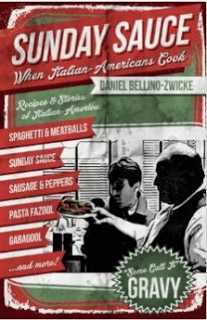
SUNDAY SAUCE

alla CLEMENZA

alla BELLINO alla PACINO

“RED SAUCE


MAKING RED SAUCE
Author of SUNDAY SAUCE

Daniel Bellino “Z”

MAKING “RED SAUCE”

aka SUNDAY SAUCE

aka “GRAVY”


MANGIA ITALIANO

ITALIAN FOOD MEMORIES

ITALY & NEW YORK

STORIES with RECIPES

Sicilian Pasta al Forno Recipe Baked Maccheroni


PASTA al FORNO alla PINA
 
SICILY

PASTA al FORNO SICILIANA
 
SICILY


PINA’S Homemade MACCHERONI PASTA
.
.
.
 
 
NONNA BELLINO’S COOKBOOK
 
RECIPES From MY SICILIAN NONNA
 
DANIEL BELLINO


Stanley Tucci Favorite Italian Pasta Recipes Italy


Stanley Tucci “BIG NIGHT”
 
The TIMPANO
 

# 3 Rigatoni Amatriciana


PASTA AMATRICIANA
 
1¼ pounds rigatoni pasta (or bucatini)
120g / 4½ oz guanciale (cured pork jowl)
6-7 San Marzano tomatoes
100g / 3½ oz grated pecorino romano cheese
½ glass dry white wine
1 tablespoon extra virgin olive oil
Salt
Black pepper
 
PREPARATION : 
Fill a large pot with water, add salt and bring it to the boil.
In the meantime, heat the extra virgin olive oil in a frying pan. Chop the guanciale into thick strips, add it to the an and cook until crispy. Add the white wine, cook for a minute to reduce, then remove the guanciale from the pan with a slotted spoon and set aside.
Add six or seven San Marzano tomatoes to the pan with the remaining oil and fat from the guanciale. Use a wooden spoon to flatten the tomatoes and simmer for a few minutes.
Cook the rigatoni in the pot of boiling water until al dente, add the crispy guanciale back into the pan of tomatoes then drain the pasta and add it to the sauce.
Toss everything together well then divide into portions and serve with a sprinkle of grated pecorino and a crack of freshly ground black pepper.
 
 
The WORLD’S TASTIEST RECIPE ?
RAGU BOLOGNESE
.
.
# 1 FAVORITE PASTA RECIPE EVER !

PASTA BOLOGNESE

BEST RECIPE EVER !!!
.
.
.
The WORLDS TASTIEST RECIPE

RAGU BOLOGNESE
by Daniel Bellino Zwicke

aka “Danny Bolognese”

.
.

Spaghetti Nerano alla Bellino

Honorable Mention
.
.

SPAGHETTI NERANO – Recipe


Spaghetti is one of the most famous dishes of the Amalfi Coast. The dish comes from the town of Nerano on the coast of the Sorrento Peninsula just across from Capri. The dish was created by Maria Grazia at her trattoria in Nerano. The primary ingredient of the dish is Zucchini with Povola or Caciocavallo Cheese grated into the pasta. Many restaurants on the Amalfi Coast and Capri serve this dish, and most locals know how to make it, and cook it at home, especially if they happen to have a little garden growing Zucchini, Tomatoes, and other vegetables. It’s easy to make and soul satisfying. If you’ve been to the area you may have already eaten it, and so know you can make it back home. Enjoy.


Ingredients :

3 medium sized Zucchini, washed

4 tablespoons Olive Oil

1 tablespoon Butter

3 cloves Garlic, peeled and cut in half

¼ cup fresh Basil, washed and leaves torn in half

¾  cup of grated Caciocavallo Cheese

1 pound imported Italian Spaghetti

Sea Salt and ground Black Pepper

Slice the Zucchini into ⅛” rounds.

Fill a large pot ¾ full of water, with 2 tablespoons salt and bring to the boil.

Place the Olive Oil  in  a large frying pan, and turn heat to a medium flame. Add the Zucchini and start to cool. Sprinkle the zucchini with about ½ teaspoon each of salt and Black Pepper. Add the butter and garlic and cook the zucchini for 4-5 minutes on medium heat.

Add about a ¼ of the pasta cooking water to the pan with the zucchini, turn the heat to low and cook for about 6 minutes on low heat. Stir the zucchini with a wooden spoon as it is cooking.

Put the spaghetti into the rapidly boiling water and cook according to the directions on the package and the spaghetti is al dente (slightly firm to the bite) usually about 10-11 minutes.

After the zucchini has cooked for a total of about 11 minutes. Turn the heat off. add the Basil and stir. Taste 1 piece of zucchini for seasoning to see if you want to add any more salt or pepper.

When the spaghetti is cooked, turn the heat off and drain the spaghetti into a colander, reserving ¼ cup of the pasta cooking water in case you need to add to the sauce.

Return the spaghetti to the put that it cooked in. Add all zucchini and all the juices from the pan in the pot with the spaghetti and stir.

Add half of the grated Caciocavallo cheese and stir. The consistency should be just slightly loose. If it is too tight, add a little pasta cooking water and stir. 

Plate the spaghetti on 4 plates, giving each person an even amount of zucchini. Drizzle a little olive oil over each plate and serve.

Note :  It’s best to make the dish with Caciocavallo Cheese, but if you can’t find, a combination of half grated Pecorino and half of Parmigiano Reggiano is a good substitute, or just Parmigano or Pecorino on their own.

Note II : Once you know how to make Spaghetti Nerano, you can make little variations, simply by adding one other ingredient that marries well with the dish. A great addition to this dish is to make Spaghetti Nerano just as above, and to add 4 or 5 pieces of sauteed shrimp on to each plate. Just have the shrimp ready and cook them in a little olive oil, seasoned with salt & pepper, and cooked for about 2 minutes on each side. Turn the heat off and add 4 or 5 pieces of shrimp to the plate with the Spaghetti Nerano and enjoy.

.

.

This Recipe complements of Best Selling Italian Cookbook AUthor DBZ from his latest book

POSITANO The AMALFI COAST COOKBOOK & TRAVEL

.

.

.
POSITANO

The AMALFI COAST

COOKBOOK / TRAVEL GUIDE

.
.
.
.
# 2  SPAGHETTI CARBONARA

WATCH SPAGHETTI CARBONARA 

SPAGHETTI VONGOLE

“SPAGHETTI with CLAM SAUCE”

RECIPE Courtesy of BEST SELLING ITALIAN COOKBOOK AUTHOR

.
Spaghetti Vongole at Da MARINO

NAPLES, ITALY


Cookbook Author Daniel Bellino Zwicke says that this is the single best plate of
Spaghetti Vongole he has ever had in his life, and he has had many. He took this picture of his plate of Spaghetti Vongole at Ristorante / Pizzeria Da Marino in Naples one day. Daniel says that it was one of the most memorable meals of his life, “I Loved it,” he said. He had a Insalata Frutta di Mare ( recipe ) for antipasto, which he said was as good as can be.

Daniel says that he was just planning on a plate of Spaghetti Vongole and a stater, but when he saw the pizzas coming from the oven and how good they looking, he couldn’t resist. He ordered a 
Pizza con Salame thinking he would eat just half. “It was so good, I ate the whole thing. One of the best pizzas I’ve ever had in my entire life, and much better than ones I’ve had at Da Mateo and other much more famous Pizzerias of Napoli,” stated Daniel.
.
.


RECIPE – SPAGHETTI VONGOLE

1 lb. Imported Italian Spaghetti (or Linguine)

1 pound Cockles or Manila Clams

18 Littleneck Clams

12 tablespoons Olive Oil

4 cloves Garlic, peeled. Cut 3 cloves into thin slivers, keep one garlic clove whole.

1/8 teaspoon Red Pepper Flakes

12 Cherry Tomatoes, cut in half

Salt & Black Pepper

4 tablespoons chopped fresh Parsley

¼ cup Water

Place Littleneck clams in a medium size pot with a lid. Add Water and clams with 1 whole garlic clove, cover pot. Turn heat up to high and cook clams until they just open. Turn flame off. Remove clams from pot and reserve the cooking liquid.

Put a large pot of water on stove and bring to boil for cooking the pasta. Add Spaghetti or Linguine to pot of rapidly boiling water with salt and cook according to directions on package.

Sauté Garlic in Olive Oil in a large sauté pan over medium until garlic just starts to brown, lower heat to low and add Red Pepper. Cook 1 Minute.

Add Cherry Tomatoes and cook over medium heat for 2 minutes.

Add Cockles (or Manila Clams) to pan with garlic and olive oil. Add cooking liquid from larger Cherry Stone Clams to pan. Put cover on pan and turn heat to high, and cook until the Cockles (clams) just open.

Remove cooked Cherrystones from shells and chop each clam into about 6 pieces or so. Add the Chopped Cherrystone Clams and Parsley to pan with Cockles. When pasta is done cooking, drain it and add to pan with clams. Using a pair of tongs, mix pasta with clams, and cooking liquid.

Divide Pasta into 4 to 6 equal portions on plates or pasta bowls. Divide all cooking liquid and Clams over each portion of pasta on the plates. Sprinkle on some more Olive Oil once Pasta is plated. Enjoy.

RECIPE excerpted from POSITANO The AMALFI COAST COOKBOOK / TRAVEL , courtesy of author Daniel Bellino Zwicke ….


# 5 – SPAGHETTI POMODORO

.
SPAGHETTI POMODORO

TOMATO SAUCE RECIPE


FAVORITE ITALIAN PASTA RECIPES

# 6 PASTA al NORMA

From SICILY

.
.
Ingredients SPAGHETTI al NORMA


.
.
GRANDMA BELLINO’S COOKBOOK

CAPONATA – MEATBALLS 

SOUPS – PASTA

PASTA al NORMA

And More …
.
FAMOUS PASTA of ROME

STANLEY TUCCI’S FAVORITE PASTA

PASTA of ROME

AMATRICIANA – CARBONARA

PASTA all GRICIA – CACIO PEPE

And MORE ….

MEMORIES of ITALIAN FOOD

THROUGH STORIES & RECIPES

ITALY & NEW YORK

.
.

Ronzoni Pasta Company of New York – Ronzoni Sono Buoni – Ronzoni Pasta is So Good

RONZONI

MEZZE RIGATONI


.
“Ronzoni Sono Buoni,”
if you are Italian and grew up in the New York area in the great
decades of the 1960’s and or 70s you know the slogan. We Italians do love our
pasta, we’re weened on it! Pasta is the main staple of our diet. Many are
fanatical about and love it so, they insist on having it several times a week.
I’m one. Pasta, can be covered in a wide variety of sauces,  in some soups like; Pasta Fagoli (Pasta Fazool),
in Minestrone’s, with Pasta and Peas, and Pasta con Ceci (Chick Peas). Yes, we
are weened on it. Mommy gave me, my bothers and sister Pastina coated in a bit
of butter and Parmigiano when we were just toddlers  and every so
often I have to pick up a box of Ronzoni Pastina, as I love and crave it still,
and of late as with many my age, you start craving things you loved as a child,
thus my stints with PASTINA .“Ronzoni Sono Buoni,” it means, Ronzoni
is So Good, and that it is. This brand of  Pasta, born in New York City at the
turn of the 20th Century has been a mainstay of not only
Italian-Americans of the East Coast but, for all. For years before the surge of
many a imported pasta product in the U.S., Ronzoni, was not the only game in
town for Macaroni, there was the Prince and Creamette, as well, but Ronzoni
dominated the market and though I don’t have stats, I would wage to say that 85
to 90 % of all commercial pasta sold in the New York, New Jersey, and
Philadelphia areas was Ronzoni, the pasta in the bright blue boxes, Ronzoni
Sono Buoni. God I wonder how many plates and bowls of Spaghetti, Ziti and other
Ronzoni pastas I ate over the years, starting with Pastina as
a toddler  and moving to Spaghetti with Tomato Sauce or Meatballs,
Baked Ziti, Stuffed Shells and more. Oh “Stuffed Shells,” they bring back
memories of my mother who loved them. We had them often, along with Lasagna
made with Ronzoni Lasagana. You don’t see Stuffed Shells around that much any
more, they used to be on many a restaurant and even more home menus. There
popularity has waned, but every once and a while I’ll pick up a box of Ronzoni
large shells, just for the purpose of bringing back those memories of mom
making them and me loving them as  a child. I’ll make a batch of
tomato sauce, cook the Ronzoni Shells, and stuff them with ricotta and
Parmigiano, bake them in tomato sauce, and “Voila” Stuffed Shells of
days gone by. I do the same with a Pastina as I still love the dish so, dressed
with butter and fresh grated Parmigiano Reggiano, “makes me feel like a kid
again!” Yum, delicious little pleasure you can whip up in minutes and
bring back visions of your youth. All with some butter, Parmigiano and a box of
Ronzoni Pastina. That’s Ronzoni, every bit a part of my life and youth as
a spring ol Slinky, Etch-A-Sketch, The Three Stooges, Saturday Morning
Cartoons, and all the favorites of my youth, 


Ronzon Sono Buoni

“Ronzoni it’s
so good!”


… Daniel Bellino Z …..


Screen Shot 2015-09-20 at 11.24.43 AM

SPAGHETTI


RONZONI – HISTORICAL TIME LINE


1915: Ronzoni officially begins business as a private family-owned company

1984: Ronzoni is sold to General Foods

1990: General Foods sells Ronzoni to Hershey Pasta Group

1999: General Foods sells to a group of investors led by the New York firm Joesph Littlejohn and Levy. The new company took the name New World Pasta

2006: The Ebro Puleva Group acquires New World Pasta, which included the Ronzoni brand

2016: The Ebro Puleva Group merges with Ebro Foods

2021: 8th Avenue Food & Provisions (formerly Dakota Growers Pasta Company) acquires Ronzoni and a dry pasta manufacturing facility in Virginia. The Virginia facility is the company’s third manufacturing location; the previous two were in North Dakota and Minnesota.

.
.

Screen Shot 2015-06-21 at 12.01.36 PM

SEGRETO ITALIANO


SECRET ITALIAN RECIPES


SALSA SEGRETO


FAMOUS PASTA SAUCE


RECCIPE of GINO’S NEW YORK


RONZONI MACARONI COMPANY


LONG ISLAND CITY, QUEENS NEW YORK

1918


RONZONI FACTS 

From an Article in the New York Times 1974

I’m sure these facts are no longer true, as many Americans now buy a lot more imported Italian pasta then they did back in 1974. In the 1950’s, 60’s 70’s  and even into the 1980’s  Ronzoni dominated the past market, not only in New York, but for the entire country. 

1  –   New York is the largest market for pasta in America, accounting for 20% of all pasta sales in
         America, comes from New York.

2  –   Ronzoni sells more than 40% of all pasta sold in New York.

3  –   Ronzoni’s sales were more than $40 Million dollars in 1973.


RONZONI PASTINA

“NO MORE” !


SAD NEWS

The Ronzoni Macaroni Company is discontinuing Pastina, due to low sales. “What” ? Yes folks, it’s true.  After 107 of being one of Italian-America’s favorite pastas, and the one maccheroni products is always the first one we eat, as Italian mothers feed their little babies Ronzoni Pastina, dressed in a little butter as one of the first solid foods their baby will eat, thus one of Italian-America’s most time honored traditions. We all Love our pastina. But no more. Not Ronzoni Pastina anyway. Yes, a sad day for us Italians. We will have to find another brand of pastina, even though Ronzoni’s is our most beloved, it will be no more.


SINATRA SAUCE

The COOKBOOK

COOK & EAT LIKE FRANK


.

https://pagead2.googlesyndication.com/pagead/js/adsbygoogle.js

How to Make Clemenza Godfather Sunday Sauce Italian Gravy Recipe with Meatballs alla Pacino

LEARN HOW TO MAKE SUNDAY SAUCE
 
alla CLEMENZA – ITALIAN GRAVY
1. GET A COPY of SUNDAY SAUCE
WHEN ITALIAN AMERICANS COOK
 
by DANIEL BELLINO ZWICKE
CLEMENZA’S SUNDAY SAUCE RECIPE
Is In THERE .. IT’S AVAILABLE
on Amazon.com .. Just CLICK LINK ABOVE ..
 
“THAT’S STEP 1 .. FINITO !!!”
2. GO To YOUR LOCAL PORK STORE and or GROCERY STORE
For SAUSAGES, Gorund Beef, Veal, Pork, etc., BRACIOLE,
OOLIVE OIL, TOMATOES, PASTA, etc..
 
3. ASSEMBLE INGREDIENTS, POTS and EVERYTHING
YOU NEED To MAKE The “SAUCE”
 
4.  SAUTE GARLIC & MINCED ONIONS in OLIVE In 
A LARGE POT.  ADD TOMATOES.
5.  BROWN BRACIOLE, THEN ADD To POT With TOMATOES ..
 
 
6.  IF USING PORK RIBS or PORK NECK, BROWN COMEPLETELY
THEN ADD TO POT With TOMATOES .. 
 
If NOT using PORK RIBS, SKIP THIS STEP.


7.  LET SAUCE With THE MEATS (Except MEATBALLS)
SIMMER At VERY LOW HEAT For 1 HOUR.
 
 
8.  BROWN SAUSAGES THEN ADD To SAUCE.
CONTINUE SIMMERING.
9.  AFTER YOU ADD The SAUSAGES TO SAUCE, MAKE THE MEATBALLS
by MIXING GROUND BEEF, PORK & VEAL with SALT, PEPPER, GARLIC,
FRESH PARSLEY, and GRATED CHEESE. FORM INTO MEATBALLS.
10.  PLACE MEATBALLS in a LIGHTLY OIL PAN and SLOWLY COOK in A
350  DEGREE OVEN For 12 MINUTES.
 
11.  REMOVE MEATBALLS FROM OVEN and PLACE in POT 
With SAUCE. The SAUCE SHOULD HAVE BEEN SLOWLY COOKING 
With THE BRACIOLE and OTHER MEATS For 2 1/2 HOURS by Now.
YOU Will JUST COOK The MEATBALLS in THE SAUCE For 15 
MINUTES on VERY LOW HEAT. 
 
BE CAREFUL WHEN
STIRRING NOT To BREAK MEATBALLS.
WHEN THE MEATBALLS HAVE COOKED In THE SAUCE
FOR 15 MINUTES, The “SAUCE” IS DONE.


12.  COOK RIGATONI or WHICHEVER 
MACCHERONI YOU LIKE and SERVE
WITH THe “GRAVY”
PASS GRATED CHEESE
and
BUON APPETITO !!!
SUNDAY SAUCE 
 
Is AVAILABLE in PAPERBACK
 
And KINDLE on AMAZON.com
 
SUNDAY SAUCE
 
alla CLEMENZA all BELLINO alla PACINO


SUNDAY SAUCE alla BELLINO
 
alla PACINO


AUTHOR DANIEL BELLINO ZWICKE
MANGIA BENE !!!

The Last Supper – Forlini Closes Down New York Italian

FORLINI’S
 
“OLD SCHOOL RED SAUCE JOINT is GONE” !!!
 
BAXTER STREET NY NY

 
The BAR at “FORLINI’S”
 
BACK in The DAY

 
FORLINI’S ITALIAN RESTUARANT
 
“The LAST SUPPER”
 
BAXTER STREET, NEW YORK


SINATRA SAUCE
COOK & EAT LIKE FRANK
His FAVORITE ITALIAN RECIPES
.
.
GOOD TIMES at FORLINI’S


FORLINI’S


Forlini’s, one of Manhattan’s last remaining red sauce joints that first opened in 1956, has officially closed, owner Joe Forlini confirmed to Eater in an interview. The building that houses has also been sold. Earlier this week, Forlini told Eater that the restaurant, located at 93 Baxter Street, near Walker Street, may close on April 18 — or sooner. “I like the idea of closing that Monday after Easter Sunday,” Forlini said at the time, adding that it’s ultimately up to the new owners to decide. However, after publication of this article, Forlini suddenly told Eater via phone that the restaurant had held its last service as of last night. Forlini would not elaborate on the change. 

Forlini confirmed that 12 family members currently own the 91-93 Baxter Street building, with him and Derek Forlini as the sole operators of the restaurant. Forlini says the reason for the closure was simply due to age. “My cousin and I are in our sixties now,” he says.

Over the years, Forlini’s became known for its old-school classic dishes like veal scalloppini, lasagna, chicken parmigiana, and limoncello, and it’s remained a restaurant that Eater critic Robert Sietsema considers one of the rare spots to eat well in Little Italy these days.

Given its proximity to the Manhattan courts, Forlini’s became a favorite amongst lawyers, judges, and jurors on lunch break. In recent years, the restaurant has also been embraced by the fashion industry, with Vogueonce hosting a Met Gala pre-party at the establishment. 

Forlini did not disclose the name of the new owners, and that his real estate agent is not currently aware of anyone slated to rent the restaurant space. However, he stated that the new owners purchased the whole restaurant space, including tables, chairs, and equipment. Joe and his cousin Derek Forlini retain the Forlini’s name.

In 2020, Eater reported that the building that houses the family-run restaurant was on the market for $15 million and would subsequently shut down. Sales documents that year estimated that the value of the restaurant, was estimated to be worth $32,000 a month in rent. The amount Forlini and his family ended up selling both the restaurant and building for was not disclosed to Eater. 

Eater reached out to Marcus & Millichap real estate group, which originally listed the building complex in 2020, but did not hear back by the time of publication (Forlini told Eater that he worked with a different, unnamed real estate agent team for the final sale). 

“We’re going to go out and celebrate exactly like we did for 70 plus years,” Forlini told Eater earlier this week, in response to whether any specials were in the works for the restaurants winding down. Forlini added that after the restaurant’s official closure, he plans to host a private party for his staff at the restaurant. 

The sale of the storied restaurant comes at a contentious time for Baxter Street. In 2017, former Mayor Bill de Blasio approved a plan to turn Chinatown’s Manhattan Detention Center into the world’s tallest jail, a proposal that local activists have long pushed back against — in part because of its affects on Chinatown businesses, some of which have already been forced to vacate. Forlini told Eater that his decision to close the restaurant was not related to the Baxter Street project.

Official Ragu Bolognese Recipe of Bologna – Authentic Pasta all Bolognese


This is The OFFICAL RECIPE for BOLOGNESE RAGU of BOLOGNA, ITALY

This RECIPE CRITERIA for a Properly Made “RAGU” (of Bologna) according to 

AGRICOLTURA Di BOLOGNA (The Agricultural Commission of BOLOGNA)

This is the renewed recipe for the real ragù alla bolognese:

 
INGREDIENTS AND DOSES (FOR 6 PEOPLE)

Coarsely ground beef: 400 g; Fresh sliced ​​pork belly, 150 g; half an onion, about 60 g; 1 carrot, about 60 g; 1 stick of celery, about 60 g; 1 glass of red or white wine; Tomato puree: 200 g; Double concentrated tomato paste: 1 tablespoon; 1 glass of whole milk (optional); Light meat or vegetable broth (also stock cube); Extra virgin olive oil: 3 tablespoons; Salt and pepper.


PROCEDURE

In a non-stick saucepan (of excellent quality, heavy) or made of aluminum or enameled cast iron (once upon a time the earthenware pot was very popular) of 24-26 cm in diameter, melt the minced or chopped bacon with 3 tablespoons of oil. Then, add the finely chopped herbs on the cutting board (do not use the mixer) and slowly fry the mixture over medium-low heat, always stirring with a wooden spoon (the onion must absolutely not take on a burnt flavor). Raise the heat and add the minced meat and, always stirring carefully, cook it for about ten minutes until it “sizzles”.
Pour the wine and let it evaporate and reduce completely, until you no longer smell the wine and then add the concentrate and the puree. Continuing to mix well, pour a cup of boiling broth (but you can also use just water) and cook slowly, with the container covered, for about 2 hours (even 3 hours depending on your preferences and the meats used) adding the hot broth as needed. Halfway through cooking, according to an advisable ancient tradition, you can add the milk that must be reduced completely. Finally, once cooking is finished, season with salt and pepper. The ragù should be a nice dark orange color, enveloping and creamy.

NOTE :
Traditionally in Bologna they used the “cartella”, that is the diaphragm of the beef, today difficult to find. In its absence, or in addition, the front cuts rich in collagen are to be preferred such as the muscle, the shoulder, the under-shoulder, the belly, the brisket. Mixed cuts can be made. According to a modern processing technique, the meats are browned well separately, alone, and then mixed with the chopped herbs, also already browned.


VARIANTS ALLOWED :

1) Mixed meats: beef (about 60%) and pork (about 40%) (loin or neck);
2) Minced meat;
3) Rolled or flat pork belly instead of fresh bacon;
4) A scent of nutmeg;

VARIANTS NOT ALLOWED
 
 1) Veal pulp;
2) Smoked bacon;
3) Only pork;
4) Garlic, rosemary, parsley, other herbs or spices;
5) Brandy (in place of wine);
6) Flour (to thicken).

BOLOGNESE RAGOUT CAN Be ENRICHED With :

 1) Chicken livers, hearts and gizzards;
2) Peeled and crumbled pork sausage;
3) Blanched peas added at the end of cooking;
4) Soaked dried porcini mushrooms.


The RAGU BOLOGNESE COOKBOOK
AMERICA’S FAVORITE RECIPE
TAGLIATELLE BOLOGNESE

“Over the years, the recipe registered in 1982 has been reported in books, magazines, newspaper articles and websites in Italy and the rest of the world, constituting a clear and reliable point of reference; however, after four decades, a study of the changes that have occurred in the creation of this symbolic dish of Italian cuisine, loved throughout the world, was required.

There have been improvements in ingredients, in the quality of containers and in heat sources, as well as changes in eating habits which have had partial effects on the way ragù is prepared.

The three Bolognese Delegations have therefore set up a “Study Committee” for the updating and improvement of the recipe for Ragù alla Bolognese and, in order to obtain a current and complete overview, the Committee has consulted, through a specific questionnaire: the best restaurants in the city, custodians of tried and tested recipes; families with ancient traditions; expert gastronomes.

Ragù alla Bolognese, like all long-standing recipes, is made in families and restaurants in ever-changing ways, as demonstrated by the fact that the recipes received during the study are all different from each other, often in small details but, at times, also with substantial differences.

The “Study Committee”, making a reasoned synthesis, has therefore drawn up a new version of Ragù alla Bolognese which is very detailed in the procedure, with variations (allowed and not allowed) and advice on the cuts of meat and on possible “enrichments”.

The three Bolognese Delegations of the Italian Academy of Cuisine have thus decreed which recipe currently adheres most closely to the formula that guarantees the classic and traditional taste of the true Ragù alla Bolognese, which is what is made, cooked, served and enjoyed today in homes, in restaurants and in bars.

trattorias and restaurants in learned and fat Bologna.
The registered recipe is not intended to be the only possible one, but rather to be a safe guide to the creation of an excellent dish that does not betray traditional customs and establishes some fixed points, with the awareness that, as with musical scores, the true art lies in the execution”.
 
The notarial deed of the recipe is now jealously guarded in the Palazzo della Mercanzia. It completes the collection of thirty-four recipes of the Bolognese gastronomic culture deposited. All the result of the collaboration between the Chamber of Commerce of Bologna and the Italian Academy of Cuisine that began on April 16, 1972 with the deposit of the golden measure of the authentic tagliatella alla bolognese.


MORE on BOLOGNESE