Everything You Need to Know about GABAGOOL – But was Afraid to Ask

 “BUT Was AFRAID to ASK” !!!


TONY & HIS GABAGOOL

“I LOVE GABAGOOL”

If you’re a fan of The Sopranos, you’ve likely adopted the term “gabagool” after hearing the clan discuss their love of cured meats every few episodes. If you were to order gabagool at a typical restaurant, you may receive some furrowed brows, but if you’re in a region with a large Italian-American population, like New Jersey, they’ll have a platter of capicola in front of you in no time.

Capicola, which SBS describes as a “moist and tender” cured meat made from the neck of a pig, is a delicious addition to charcuterie platters and antipasto, and is often served alongside other Italian meats such as prosciutto and salami. While many Americans have had a taste of this salty cured meat before, they probably don’t introduce it to their party guests as gabagool unless they’re Italian-American. So, where in the world did this word originate from and what does it actually mean? 

The word gabagool was born when a variety of Italian dialects merged, but what it translates to in Italian is: nothing. Atlas Obscura confirms that gabagool is just a mutation of the word capicola, spoken with a very specific accent.

Naples-born linguistics professor Mariapaola D’Imperio explains to Atlas Obscura that Italian linguistics is far from straightforward. The Italian language, D’Imperio notes, was initially a smorgasbord of multiple dialects. Each old Italian “kingdom” spoke its own variation of the language up until unification, when Italian officials picked one language, known as Standard Italian, to make communication easier.

Italian-Americans — those responsible for the notorious term gabagool — speak an Italian that is nowhere near Standard Italian, claims Atlas Obscura. “Instead it’s a construction of the frozen shards left over from languages that don’t even really exist in Italy any more, with minimal intervention from modern Italian,” writes Atlas Obscura’s Dan Nosowitz. Regardless of the language’s progression, Italian-Americans on the East Coast can all agree that gabagool is capicola.

Over the years the Italian language in America has morphed into something new, and Italian-Americans continue to celebrate their heritage by not always speaking the language, but as Nosowitz puts it, “putting on an antiquated accent for a dead sub-language to order some cheese.” Or, of course, cured meat.

That said, we’re here to talk about capicola. It’s just one of many types of cured meats, and it’s probably one you’ve heard mentioned a lot on a certain sort of television show. Chances are pretty good you may have heard about it more than you’ve had it, and it’s definitely not a more mainstream sort of cured meat, like bacon. So what, exactly, is it? It is as unhealthy — and delicious — as bacon? What makes it different from all the other types of cured meats out there? Is it as authentically Italian as it seems, or is it just pretending?

 Let’s find out.

Let’s clear up a big one here — what exactly are you eating when you take a bite of capicola? It’s actually impressively specific. 

We’ll start with where it comes from, and according to DePalma Salumi, capicola (or capocollo) is one of a number of types of cured Italian meats. This one comes specifically from the area of the pig between the neck and the fourth or fifth rib of the pork shoulder. That’s what the word means, in fact: “capo” means “head” and “collo” means “neck.” Academia Barilla gets even more specific and says the pigs of choice are at least eight months old and weigh at least 300 pounds. Traditionally, the best of the best comes from large breeds typically raised in the south of Italy. 

In case you’re wondering what makes this part of these pigs so special, SBS says it’s all because of the fat ratio. Capicola is 30 percent fat and 70 percent lean, and that means it’s both tender and moist, even after it’s been cured.

Cured meats are nothing new, and capicola definitely isn’t new. According to Academia Barilla, capicola goes back to the era of the colonies of the Magna Graecia… but what does that mean?

For that answer, we’ll need to turn to the Ancient History Encyclopedia. The Magna Graecia were areas along the coast of southern Italy that were colonized by the Greeks between the 8th and 5th centuries BC. We did say it’s been around a long, long time! 

These ancient Greeks were attracted to the area by the particularly fertile lands and its perfect position within a larger trade network, and when they settled there, they made it completely Greek. Not only did they bring things like the Olympic Games

, but they also brought stuffed pork sausages. That kicked off the start of the area’s deep love of all things pork, and they’re still known for their large-breed pigs and their pork products today — including capicola.


CAPICOLA !

aka “GABAGOOL” !!!


Capicola, coppa, capocollo… which one is it?

These ancient Greeks were attracted to the area by the particularly fertile lands and its perfect position within a larger trade network, and when they settled there, they made it completely Greek. Not only did they bring things like the Olympic Games, but they also brought stuffed pork sausages. That kicked off the start of the area’s deep love of all things pork, and they’re still known for their large-breed pigs and their pork products today — including capicola.

Capicola, coppa, capocollo… which one is it?

The Reason Some People Refer To Capicola As Gabagool

If you’re a fan of The Sopranos, you’ve likely adopted the term “gabagool” after hearing the clan discuss their love of cured meats every few episodes. If you were to order Gabagool at a typical restaurant, you may receive some furrowed brows, but if you’re in a region with a large Italian-American population, like New Jersey, they’ll have a platter of capicola in front of you in no time.

Capicola, which SBS describes as a “moist and tender” cured meat made from the neck of a pig, is a delicious addition to charcuterie platters and antipasto, and is often served alongside other Italian meats such as prosciutto and salami. While many Americans have had a taste of this salty cured meat before, they probably don’t introduce it to their party guests as gabagool unless they’re Italian-American. So, where in the world did this word originate from and what does it actually mean? 

The word gabagool was born when a variety of Italian dialects merged, but what it translates to in Italian is: nothing. Atlas Obscura confirms that gabagool is just a mutation of the word capicola, spoken with a very specific accent.


The Italian-American dialect has a complex history

Naples-born linguistics professor Mariapaola D’Imperio explains to Atlas Obscura that Italian linguistics is far from straightforward. The Italian language, D’Imperio notes, was initially a smorgasbord of multiple dialects. Each old Italian “kingdom” spoke its own variation of the language up until unification, when Italian officials picked one language, known as Standard Italian, to make communication easier.
Italian-Americans — those responsible for the notorious term gabagool — speak an Italian that is nowhere near Standard Italian, claims Atlas Obscura. “Instead it’s a construction of the frozen shards left over from languages that don’t even really exist in Italy any more, with minimal intervention from modern Italian,” writes Atlas Obscura’s Dan Nosowitz. Regardless of the language’s progression, Italian-Americans on the East Coast can all agree that gabagool is capicola.

Over the years the Italian language in America has morphed into something new, and Italian-Americans continue to celebrate their heritage by not always speaking the language, but as Nosowitz puts it, “putting on an antiquated accent for a dead sub-language to order some cheese.” Or, of course, cured meat.

There’s no denying that cured meats are delicious. Whether you’re piling them on a sandwich or serving them up on a platter, there’s just something about them that makes you crave more. But unfortunately, there have been numerous studies on just how bad for you processed meats really are (via Science Direct). 

That said, we’re here to talk about capicola. It’s just one of many types of cured meats, and it’s probably one you’ve heard mentioned a lot on a certain sort of television show. Chances are pretty good you may have heard about it more than you’ve had it, and it’s definitely not a more mainstream sort of cured meat, like bacon. So what, exactly, is it? It is as unhealthy — and delicious — as bacon? What makes it different from all the other types of cured meats out there? Is it as authentically Italian as it seems, or is it just pretending? Let’s find out!

What is capicola?

Let’s clear up a big one here — what exactly are you eating when you take a bite of capicola? It’s actually impressively specific. 

We’ll start with where it comes from, and according to DePalma Salumi, capicola (or capocollo) is one of a number of types of cured Italian meats. This one comes specifically from the area of the pig between the neck and the fourth or fifth rib of the pork shoulder. That’s what the word means, in fact: “capo” means “head” and “collo” means “neck.” Academia Barilla gets even more specific and says the pigs of choice are at least eight months old and weigh at least 300 pounds. Traditionally, the best of the best comes from large breeds typically raised in the south of Italy. 


In case you’re wondering what makes this part of these pigs so special, SBS says it’s all because of the fat ratio. Capicola is 30 percent fat and 70 percent lean, and that means it’s both tender and moist, even after it’s been cured.


TONY SOPRANOS GABAGOOL

SANDWICH


Capicola has been around for almost forever.

Cured meats are nothing new, and capicola definitely isn’t new. According to Academia Barilla, capicola goes back to the era of the colonies of the Magna Graecia… but what does that mean?

For that answer, we’ll need to turn to the Ancient History Encyclopedia. The Magna Graecia were areas along the coast of southern Italy that were colonized by the Greeks between the 8th and 5th centuries BC. We did say it’s been around a long, long time! 


SUNDAY SAUCE
RECIPES – SUNDAY SAUCE
LASAGNA – MEATBALLS
“HOW to Make a GABAGOOL SANDWICH”
And MUCH MORE …


These ancient Greeks were attracted to the area by the particularly fertile lands and its perfect position within a larger trade network, and when they settled there, they made it completely Greek. Not only did they bring things like the Olympic Games, but they also brought stuffed pork sausages. That kicked off the start of the area’s deep love of all things pork, and they’re still known for their large-breed pigs and their pork products today — including capicola.

Capicola, coppa, capocollo… which one is it?

There are a lot of different terms you’ve probably heard used to refer to various meats, and a lot of them sound very, very similar to “capicola.” Let’s clear up any potential confusion with help from DiBruno Bros. 

At the root of the confusion is the fact that many regions in Italy have their own version of capicola, and some are very specific just to that area. (Think of champagne — the real stuff only comes from the Champagne region in France, otherwise it’s more accurately described as sparkling wine.) For example, Coppa Piacentina involves stuffing the meat into a casing of intestine, and Coppa di Calabria uses wine in the process… and they’re both kinds of Italian capicola. The version that’s made in America is a little different, though, and it’s made with either red pepper or black peppercorn. 

Then, there’s ham capocollo, which is also called ham-capi and it’s also a different thing. That’s essentially a spiced and boiled ham, and it’s said to be a cross between ham and capicola. Confusing, right?

There are still other types of coppa/capocollo/capicola, says DeLallo. The region of Umbria uses coriander and fennel, while Basilicata traditionally uses hot pepper powder, and their version is typically not as salty or smoky as the stuff from Calabria. The long and short of it is yes, there are different varieties and they come from different regions. 

What makes Capicola different from other thin, cured meats — like Prosciutto?


Cured meats all go through a similar process of washing, salting, and drying… so what makes capicola different from other thin-sliced, cured meats?

Essentially, it’s where the meat comes from on the pig that makes it different, says the Huffington Post. Take prosciutto. That comes from the pig’s hind leg, and it cures for anywhere from nine months to two years. Speck also comes from the hind leg, but it’s made using different spices and it’s cold smoked after it’s cured. Speck, prosciutto, and capicola can all be used pretty interchangeably, but they’re going to taste different and capicola is from an entirely different part of the pig.
What about soppressata? That can come from pretty much any part of the pig, and it can even include “leftover” bits like the head and tongue. Serrano ham? That’s Spanish, and it can only be called that if it’s from a certain breed of pig, the Landrace. (Similarly, Iberico ham has to come from Iberico pigs.)

The confusing part isn’t over just yet — it’s also worth talking about the two different ways capicola is made. Bear with us. 

Technically, says The Daring Gourmet, capicola (or capocollo) refers to the thin-sliced neck and shoulder meat that’s been cooked. When that piece of neck and shoulder meat is dry-cured, it’s more appropriately called coppa… although in the U.S., the terms are often used interchangeably. If you order capicola at your local deli counter, you might just get the dry-cured stuff. 

So, what does it mean when we talk about the process of dry-curing? Again, this is also different based on region and tradition, but essentially, DeLallo says that the process involves taking your piece of meat, adding salt and other spices, then putting into a natural casing, tying it up, and letting it age for at least several months. 

And here’s why Italy is so good at making these types of meats. According to Academia Barilla, the combination of humidity and temperature found in particular areas of Italy make it perfect for slow aging, as there’s little to no risk of the development of mold.


The Reason Some People Refer To Capicola As Gabagool

If you’re a fan of The Sopranos, you’ve likely adopted the term “Gabagool” after hearing the clan discuss their love of cured meats every few episodes. If you were to order gabagool at a typical restaurant, you may receive some furrowed brows, but if you’re in a region with a large Italian-American population, like New Jersey, they’ll have a platter of capicola in front of you in no time.

Capicola, which SBS describes as a “moist and tender” cured meat made from the neck of a pig, is a delicious addition to charcuterie platters and antipasto, and is often served alongside other Italian meats such as prosciutto and salami. While many Americans have had a taste of this salty cured meat before, they probably don’t introduce it to their party guests as gabagool unless they’re Italian-American. So, where in the world did this word originate from and what does it actually mean? 

The word gabagool was born when a variety of Italian dialects merged, but what it translates to in Italian is: nothing. Atlas Obscura confirms that gabagool is just a mutation of the word capicola, spoken with a very specific accent.
The Italian-American dialect has a complex history.
Naples-born linguistics professor Mariapaola D’Imperio explains to Atlas Obscura that Italian linguistics is far from straightforward. The Italian language, D’Imperio notes, was initially a smorgasbord of multiple dialects. Each old Italian “kingdom” spoke its own variation of the language up until unification, when Italian officials picked one language, known as Standard Italian, to make communication easier.


Italian-Americans — those responsible for the notorious term gabagool — speak an Italian that is nowhere near Standard Italian, claims Atlas Obscura. “Instead it’s a construction of the frozen shards left over from languages that don’t even really exist in Italy any more, with minimal intervention from modern Italian,” writes Atlas Obscura’s Dan Nosowitz. Regardless of the language’s progression, Italian-Americans on the East Coast can all agree that gabagool is capicola.

Over the years the Italian language in America has morphed into something new, and Italian-Americans continue to celebrate their heritage by not always speaking the language, but as Nosowitz puts it, “putting on an antiquated accent for a dead sub-language to order some cheese.” Or, of course, cured meat.


A Plate of CAPICOLA

There’s no denying that cured meats are delicious. Whether you’re piling them on a sandwich or serving them up on a platter, there’s just something about them that makes you crave more. But unfortunately, there have been numerous studies on just how bad for you processed meats really are (via Science Direct). 

That said, we’re here to talk about capicola. It’s just one of many types of cured meats, and it’s probably one you’ve heard mentioned a lot on a certain sort of television show. Chances are pretty good you may have heard about it more than you’ve had it, and it’s definitely not a more mainstream sort of cured meat, like bacon. So what, exactly, is it? It is as unhealthy — and delicious — as bacon? What makes it different from all the other types of cured meats out there? Is it as authentically Italian as it seems, or is it just pretending? Let’s find out!


What is Capicola?

Let’s clear up a big one here — what exactly are you eating when you take a bite of capicola? It’s actually impressively specific. 

We’ll start with where it comes from, and according to DePalma Salumi, capicola (or capocollo) is one of a number of types of cured Italian meats. This one comes specifically from the area of the pig between the neck and the fourth or fifth rib of the pork shoulder. That’s what the word means, in fact: “capo” means “head” and “collo” means “neck.” Academia Barilla gets even more specific and says the pigs of choice are at least eight months old and weigh at least 300 pounds. Traditionally, the best of the best comes from large breeds typically raised in the south of Italy. 


In case you’re wondering what makes this part of these pigs so special, SBS says it’s all because of the fat ratio. Capicola is 30 percent fat and 70 percent lean, and that means it’s both tender and moist, even after it’s been cured.

Capicola has been around for almost forever
Shutterstock
Cured meats are nothing new, and capicola definitely isn’t new. According to Academia Barilla, capicola goes back to the era of the colonies of the Magna Graecia… but what does that mean?

For that answer, we’ll need to turn to the Ancient History Encyclopedia. The Magna Graecia were areas along the coast of southern Italy that were colonized by the Greeks between the 8th and 5th centuries BC. We did say it’s been around a long, long time! 


These ancient Greeks were attracted to the area by the particularly fertile lands and its perfect position within a larger trade network, and when they settled there, they made it completely Greek. Not only did they bring things like the Olympic Games, but they also brought stuffed pork sausages. That kicked off the start of the area’s deep love of all things pork, and they’re still known for their large-breed pigs and their pork products today — including capicola.

Capicola, coppa, capocollo… which one is it?
Shutterstock
There are a lot of different terms you’ve probably heard used to refer to various meats, and a lot of them sound very, very similar to “capicola.” Let’s clear up any potential confusion with help from DiBruno Bros. 


At the root of the confusion is the fact that many regions in Italy have their own version of capicola, and some are very specific just to that area. (Think of champagne — the real stuff only comes from the Champagne region in France, otherwise it’s more accurately described as sparkling wine.) For example, Coppa Piacentina involves stuffing the meat into a casing of intestine, and Coppa di Calabria uses wine in the process… and they’re both kinds of Italian capicola. The version that’s made in America is a little different, though, and it’s made with either red pepper or black peppercorn. 

Then, there’s ham capocollo, which is also called ham-capi and it’s also a different thing. That’s essentially a spiced and boiled ham, and it’s said to be a cross between ham and capicola. Confusing, right?


There are still other types of coppa/capocollo/capicola, says DeLallo. The region of Umbria uses coriander and fennel, while Basilicata traditionally uses hot pepper powder, and their version is typically not as salty or smoky as the stuff from Calabria. The long and short of it is yes, there are different varieties and they come from different regions. 

What makes capicola different from other thin, cured meats — like prosciutto?
Cured meats all go through a similar process of washing, salting, and drying… so what makes capicola different from other thin-sliced, cured meats?

Essentially, it’s where the meat comes from on the pig that makes it different, says the Huffington Post. Take prosciutto. That comes from the pig’s hind leg, and it cures for anywhere from nine months to two years. Speck also comes from the hind leg, but it’s made using different spices and it’s cold smoked after it’s cured. Speck, prosciutto, and capicola can all be used pretty interchangeably, but they’re going to taste different and capicola is from an entirely different part of the pig.


What about soppressata? That can come from pretty much any part of the pig, and it can even include “leftover” bits like the head and tongue. Serrano ham? That’s Spanish, and it can only be called that if it’s from a certain breed of pig, the Landrace. (Similarly, Iberico ham has to come from Iberico pigs.)

Capicola may or may not be cooked
The confusing part isn’t over just yet — it’s also worth talking about the two different ways capicola is made. Bear with us. 

Technically, says The Daring Gourmet, capicola (or capocollo) refers to the thin-sliced neck and shoulder meat that’s been cooked. When that piece of neck and shoulder meat is dry-cured, it’s more appropriately called coppa… although in the U.S., the terms are often used interchangeably. If you order capicola at your local deli counter, you might just get the dry-cured stuff. 


We did say it was confusing! 

So, what does it mean when we talk about the process of dry-curing? Again, this is also different based on region and tradition, but essentially, DeLallo says that the process involves taking your piece of meat, adding salt and other spices, then putting into a natural casing, tying it up, and letting it age for at least several months. 

And here’s why Italy is so good at making these types of meats. According to Academia Barilla, the combination of humidity and temperature found in particular areas of Italy make it perfect for slow aging, as there’s little to no risk of the development of mold.

How to make capicola.
Capicola might be hard to find, depending on where you live, and it also might be pretty expensive. But there’s good news: you can absolutely make it at home.

All you’ll need is a pork shoulder, whatever seasonings you like (and since you’re doing it at home, there’s no need to be traditional), a curing salt mix, and casings. After seasoning your pork shoulder (with the marbling, without the fat cap), there are a few things you can do. You can wrap it tightly in plastic wrap and let it sit in your fridge for a few weeks before putting it into your casing, or you can cover it in salt and let it sit for one day for each two pounds of weight. 

Either way, it’s the aging process that’s the real key here. You’ll need somewhere to hang and age your capicola for months before you actually get to cut into it, and you’re going to want a place that holds a relatively high humidity but temperatures between 50 and 60 degrees Fahrenheit (via Sausage Maker). Complicated? A bit. A long process? Very. But rewarding? Absolutely.


CAPOCOLLO


So whay do they call it GABAGOOL ?


TONY SOPRANO
EATING “GABAGOOL”


If you know capicola from The Sopranos or The Office, you probably know it as “Gabagool” That’s… not even really close to the real word, so where the heck did this come from? 

Atlas Obscura says it’s because of a weird phenomenon: the development of an accent that’s not just regional, but it’s specific to the descendents of a group of Italian immigrants. The development of language in Italy is so confusing that even professional linguists aren’t sure what the heck happened, and we’re definitely not here to argue about linguistics, so we’ll talk basics. 

Essentially, most Italian immigrants came from different regions in southern Italy, and even when they settled in the U.S., they were still divided into regional groups. And those groups spoke different versions of their native language. When they came together in the U.S., bits and pieces of the languages held on, and formed a sort of Italian-American Italian language. 

When that happened, letters started taking on different sounds and inflections. Without getting too complicated, it’s all about accents and whether or not a letter’s sound comes from your vocal cords or your mouth. The hard “c” in “capicola” became a “g,” “p” shifted into a “b.” “o” got elongated to “ooh,” and — like in so many other words — the last vowel disappeared. 

Essentially, most Italian immigrants came from different regions in southern Italy, and even when they settled in the U.S., they were still divided into regional groups. And those groups spoke different versions of their native language. When they came together in the U.S., bits and pieces of the languages held on, and formed a sort of Italian-American Italian language. 

Capicola can be made anywhere, but there’s actually a few different types that are extra special. They’ve been awarded a Protected designation of origin (PDO) status, and that basically means that particular name can only be used if the entire product is made in a particular area or region.

Most capicola retains a heavy to slight smoky flavor, and DiBruno Bros. – who only carries capicola made in America — says that there are two different types of flavor profiles you might expect. It comes down to whatever spice mixture the maker decides to use, and while there’s some wiggle room in specifics, most American capicola is either made with red pepper — which will make it hot and spicy — or with black peppercorns, which will make it more on the sweeter side. 

Flavors are so varied that before you pick out a nice-looking side of capicola, you should definitely peek at the ingredients to get an idea of what flavor profile you’re looking at. Take some do-it-yourself recipes: While some call for paprika, chipotle powder, juniper, chili powder, and nutmeg, others might call for fennel, anise, red pepper, and coriander to compliment the base of black pepper. Bottom line? There’s one out there that’s perfect for you!


READ MORE on GABAGOOL

In SUNDAY SAUCE


SUNDAY SAUCE

PASTA –  MEATBALLS – GABAGOOL

AND MUCH MORE

Italian Food in The Movies – with Recipes – Goodfellas The Godfather = Big Night


“Shove in your Saa – Seeg & Meatballs”


It all started with Pete Clemenza and The Godfather, a movie by Italian-American director Francis Ford Coppola. Yes, I guess we can say it started with Francis. It was Francis Ford Coppola who wrote the Screenplay along with the author of the Best Selling Novel – The Godfather, Mr. Mario Puzo, also an Italian-American. Coppola was the co author of The Godfather Screenplay along with Puzo. And it was Coppola who was the films director and decided what would be in the film and what wasn’t.

Coppola brilaintly sets the scene of Sonny Corleone meeting with his Capo’s and other Corleone Crime Family associates, discussing strtegies of their next moves after Virgil Sollozzo puts out a hit on Sonny’s father, Don Vito Corleone (Marlon Brand). The attempted assasination of Vito Corleone fails, and Vito Corleone is still alive, as his son Santino (Sonny) becomes the acting Boss of the Corleone Crime Family. 

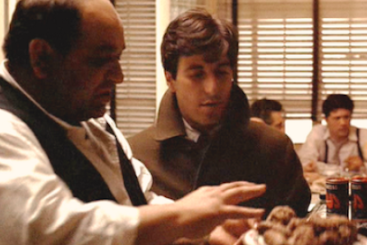
As Sonny and his cronies discuss what to do, sitting around eating Chinese Food, his Capo, Peter Clemenza is making a pot of Italian Sunday Sauce Gravy with Sausages & Meatballs. Sonny’s younger brother Michael (Al Pacino) is in the room as well. He gets a call from his girlfriend Dianne, who ask Michael if she loves him. Michael doesn’t say it, but Clemenza being the smart old guy that he is, knows what has been said, and says, “Why don’t you tell that nice girl you Love her. I Love you with all of my Heart. If I don’t again soon, I’ma gonna Die” Clemenza chuckles.

Clemenza continues cooking his Sauce, then says to Michael, “Come over here kid. Learn something. You never know when you’re gonna to cook for 20 guys someday?  You see? You start out with a little oil. Then you fry some Garlic. Then you throw in some Tomatoes, some Tomato Paste, you fry it up. You make sure it doesn’t stick. You get it to a boil. You shove in all your Sausage, and your Meatballs. Add a little bit of wine. And a little sugar, and that’s my trick.”

Yes, Clemenza making Sunday Sauce and Meatballs was a favorite scene which just about everyone recalls and talks about, and for good reasons. It’s a great scene. But let us not forget some other scenes that included Italian food. At Connie Corleone’s Wedding, we have a Corleone associate throwing a Gabagool Sandwich to Paulie (watch the video below).

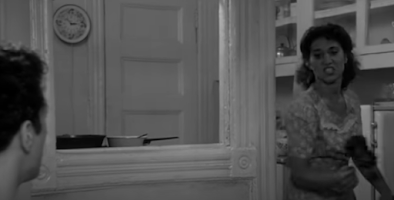
Also, let’s not forget Sonny tearing off a piece of Italian Bread, dipping it into the Sauce that Sonny’s mother has simmering on the stove. Then Sonny eats it. There are a couple scenes when the the wole Corleone Family is eating at the table. There’s the scene when Connie has cooked a meal for herself and her husband Carlo. One of Carlo’s girlfriends (Goomada) calls up asking for Carlo. Connie picks up the phone, then her and Carlo start fighting.


Another memorable scene that involved Italian Food was the meeting between Michael, Virgil Sollozzo, and Captain McCluskey at Louie’s Italian Restaurant in the Bronx. The three of them are sitting around the table when McCluskey asked Sollozzo, “How the Italian Food in this Restaurant?”
Sollozzo replies, “Get the Veal. It’s the best in the City”

Michael Corleone goes into the bathroom, and gets the gun that is planted for him inside the bathroom, above the toilet. Michael comes back out into the dining room and shoots and kills both Sollozzo and Captain McCluskey. The calmly drops the gun, and walks out of the restaurant.


MAKING SAUCE

CLEMENZA Shows MICHAEL How to Make SUNDAY SAUCE

ITALIAN GRAVY


BIG NIGHT


In the annals of Italian Food in movies, Stanley Tucci’s Big Night is way up near the top. Some would probably put it on the top of their list. Yes when it comes to Italian Food in movies, Big Night is a heavyweight. The movie centers around two brothers from Italy, in their Italian Restaurant on the Jersey Shore, Louis Prima, and a monumental dish of Southern Italy, known as a Timpano (aka Timballo). 

The brothers restaurant is not doing that well financially. The food is very good, but this is the 1950s, and the locals don’t get Chef Primo’s authentic Italian Food. When a fellow (rival) restaurant owner tells brothers Scondo (Stanley Tucci) and Primo that he knows the famous Sicilian-American singer Louis Prima, and that he is going to get him to come to the brothers restaurant, this get the ball rolling on a very special dinner hosted by the brothers, featuring Chef Primo’s wonderful food, and the centerpiece of the meal, The Timpano, a luxurious dish made of baked maccheroni, meats, sauce, and cheeses stuffed into a dough shell that’s baked in a pan called a “Timpano” by which the dish gets his name. 

The movie stars Stanley Tucci as Secondo, Tony Shaloub as Primo, Secondo’s brother, Isabella Rossellini as Gabriella, with Minnie Driver, and Marc Anthony as the busboy.

The wonderful music, fine cast, and the scenes preparing the Timapno and other dishes is superb, and it’s these scenes that captivated audiences, and inspired to make their very own Big Night Style Italian Dinner Parties. The rest is history, and people still talk about Big Night, the Timpano, and wonderful Italian Dinner.


The TIMPANO

Stanley Tucci, Marc Anthony, & Tony Shaloub
BIG NIGHT


Goodfellas

Johnny (Frank Pelligrino Sr,) & Vinny (Charlie Scorsese)

DINNER in PRISON


GOODFELLAS


There are several Italian Food scenes in Martin Scorsese’s Goodfellas, a true life story of factions of the New York Mafia members and associates, based on Nick Pellegi’s book Wiseguy. Of course the most famous food scene is when Henry (Ray Liotta) is in Prison with Vinny (Charlie Scorsese), Johnny Dio, and “Big Paulie” (Paul Sorvino). Viiny is making the Sunday Sauce Italian Gravy with Meatballs and Pork Neck, as Johnny Dio cooks up some Steaks. The scene is quite memorable, and people talk about it all the time, especially the way Paul Sorvino shaves the Garlic “Ravor Thin” with a ravor, and Big Paulie telling Vinny, “Vinny don’t put too many Onions in the Sauce.” You gotta just Love it?

The scene with Henry making Veal Scallopine and his brother stirring “The Sauce” is memorable as well. 

So if you Love Movies, Italian Food, and Italian Food in movies, there’s a good chance you already know these films and the Food Scenes in them, and if you’re like me, you talk about them, and watch the movies over and over again. When you’ve got something good, you stick with it. And that’s The Godfather, Coppola and Pacino, Clemenza and his Sauce. Big Night Stanley Tucci and The Timpano, and Marty Scorsese’s Goodfellas, Robert DeNiro, The Prison Sauce, and the main character Henry Hill, and the late great Ray Liotta, who turned in such a great performance, he was even better than DeNiro. “Yes he was.”

Watch the movies, enjoy, make a Sunday Sauce, and listen to Sinatra. What’s better than that?
GOODFELLAS

PRISON DINNER


GOODFELLAS  “PRISON SAUCE” Recipe
JOHNNY DIO’S STEAK  –  Recipe


by Daniel Bellino Zwicke


SUNDAY SAUCE alla CLEMENZA

all PACINO

From The GODFATHER

“MAKE a BIG NIGHT TIMPANO”


NONNA BELLINO’S COOKBOOK

RECIPES FROM MY SICILIAN NONNA

Note :  Timpano is also known as TIMBALLO in most parts 
of Southern Italy, and there are numerous variations, and recipes,
like the one in Grandma Bellino’s Cookbook. 


iL TIMPANO

“BIG NIGHT”


The SINATRA COOKBOOK


SINATRA SAUCE

MUSIC MEATBALLS & MERRIEMENT

Daniel Bellino Z


CARLO & CONNIE FIGHT


Connie :  “Why don’t you bring your WHORE home for dinner” ?


Paulie’s Friend throws him a Gabagool Sandwich
“Hey Paulie! I got some Gabagool” !!!

At Connie Corleone’s Wedding

Paulie’s friend (Mobster) has a couple GABAGOOL (Capicola) Sandwiches

and throws one to Paulie, who says,  “Hey you Stupid Jerk” !

Watch this at Second 00.48 on the video clip.


“Don’t Overcook it.”

“You Overcook it, it Defeats its Own Purpose”

Robert DeNiro

RAGING BULL


PS  “And Let Us Not Forget RAGING BULL and the Steak Scene”


“It’s Like a Piece of CHARCOAL”

“BRING IT OVER” !!!


“YOU WANT YOUR STEAK” !!!!


Ginos Secret Sauce and Sinatra Pasta – Gino’s of Lexington Avenue Italian Restaurant Pasta with Salsa Segreta


A Waiter at GINO’S

“You’ve got to get Pasta Segrete”


   Segreto?
It’s secret
in Italian. I got the idea for the book one day, well not the idea, but
inspiration I’d say. I was thinking about one of our all time favorites
restaurant, the food, the ambiance and all the fun we’d had there over the
years. Many wonderful meals with family and friend, no foes. Dinners with
Cousin Joe, Sister Barbara, Brother Michael, and Jimmy. Oh, the food was
wonderful, all the great Italian Classics of good old Italian-American Red
Sauce Joints of which this one, was one of the best. The classics, like: Baked
Clams, Stuffed Artichokes, Spaghetti & Meatballs, Linguine with Clam Sauce,
Chicken Parmigiano, Veal Marsala & Milanese, Chicken Cacctiatore, Ossobuco,
Cannolis, Spumoni, and-on-and-on. I think you get the picture. Lots of good,
affordable Italian Wine, the affable waiter, the phone booth, and the Zebra
Wall Paper. If you were a regular their, from the last sentence, you the place
I’m talking about. Yes Gino’s! Our beloved Gino’s of Lexington Avenue. Sadly
they closed a few years ago. But we still have the memories of so many festive
meals. Happy times, good eats.
  I discovered the wonders of Gino’s and first
brought my cousin Joe there in 1999. The place was thrilling in that, when you
walked in, you felt you were in the perfect place. Gino’s is charged with
energy by its wonderful clientele, well-healed regulars who have been going
there for years, they know the Maitre’d, the waiters and other customers, and
likewise the waiters, bartender, and maitre’d know them. The first time you walk
in, you feel that, and want to be a part of it. We did. Back then, Joe and I
used to go out to eat together all the time, at least once a week. Joe knew
about food, but not to the extent that I did. Joe would come in every week or
so, and his driver would drive us around town. He’d pick me up early evening
for a night of feasting and good times. We’d often eat at a couple different
place. We’d have our main dinner and maybe a little bite to eat when we first
went for cocktails to start the night off. As I said, Joe loved eating, and
knew quite a bit, but as much as he knew, it wasn’t a third of what I knew
about food, wine, and restaurants, and especially the restaurant, bar, and
night club scene in New York. I was teaching Joe the ropes, so-to-speak, and Joe
was an eager student. We had quite a lot of fun those few years, with dinners
at Gino’s, Elio’s (Mondays for Lasagna), Da Silvanos’s, Bar Pitti, The Waverly
Inn, Minetta Tavern, cocktails at Pegu and Temple Bar, and way too many other
places to name right here. We did New York, we did it all!
   Back to Gino’s. So I had passed by Gino’s any
number of times, but never went in to check it out. I was a downtown-er, and
that’s where we did most of our eating, with an occasional trip midtown or
other local if a place peaked our interest. So I did finally walk into Gino’s
one day. I had to check it out. When I did, as I’ve already said, I walked in
the door and immediately felt the energy of the place. Gino’s was packed, full
of life and vibrant, and I knew I wanted to be there. I didn’t eat there right
then and there, I was scouting the place out, but I knew I would be back. So I
called Joe up and told him all about the place. It sounded great to Joe, this
type of place was right up his alley, as it was mine. So Joe said yes, let’s
check it out on our next night out.
   Our first ever trip to Gino’s was a few
nights later. Joe packed me up at my place in Greenwich Village. I got in the
car, as usual, we had a little discussion on what we’d be doing. We mapped out the
night of eating and drinking, good times. We talked and decided to head over to
Otto Enoteca for a bottle of wine and some Salumi before heading up town to
Gino’s and our main dinner of the night. Joe loved Otto, and I was a fan too,
so we headed to Otto.
    Well, we went to Otto, drank a little wine,
had some Testa, Mortadella, and Prosciutto, and it was on to Gino’s. Back in
the car, and Ziggy (our driver) drove us up to Lexington Avenue, across the
street from Bloomingdale’s to Gino’s. We were excited as we walked up to the
restaurant and through the door. The place was packed and super-charged. We
loved it. The Maitre’d greeted us with the first of many warm welcomes. We were
in like Flynn. We sat down at a nice table in the middle of the restaurant. We
were happy campers. As happy as can be, for we sensed a wonderful meal ahead.
Our hunch would turn out to be just right. A waiter came to our table, greeted
us a warm welcome, gave us a wine list and menus, and asked what type of water
we wanted. As always, we got a bottle of flat water. Joe gave me the wine list
as he usually does and told me to pick something out. I looked over the
reasonably priced list and picked out a tried and true wine from my good friend
Luigi Capellini in Greve. The wine, a bottle of Verrazzano Chianti Classico.
The waiter went to get the wine, and Joe and I looked over the menu. We were
happy to see a great old school Italian menu. The Red Sauce kind of a good old
classic Italian-American joint, of which there used to be many, but at this
point of time, far fewer. They had; Shrimp Cocktail, Baked Clams, Hot
Antipasto, Clams Posillipo, Spaghetti Vongole, Lasagna, Canneloni, Veal Parm,
Veal Milanese, Eggplant Parmigiano, Shrimp Fra Diavolo, Veal Marsala, Scampi,
and all the usual suspects. We were in heaven, and it was heard narrowing down
what to eat.
   One dish really caught our attention, and
especially Joe, who although I love my pasta, Joe had has me beat, he’s the
pasta freak. Freak in a 
good
way that is. The dish was Pasta Segreto (Pasta w/Secret Sauce), and us
intrigued.
    The waiter brought the bottle of Chianti,
opened it, and we were on our way. I ripped off a piece of bread and ate it.
So, we decided on the menu. We order a Shrimp Cocktail and Baked Clams
Oreganata to start. We would share these two antipasto items, then move on to
the Primi, the pasta course. We decided on, and just had to have the Pasta
Segrete, a half order each. We both love Veal Milanese (Frank Sinatra’s
favorite), and as we were having antipasto, and pasta, as well as a couple
desserts, we decided on one Veal Milanese to split for the main course, thus
leaving room for some tasty desserts we knew Gino’s would have. We talked with
the our waiter about the menu, and he agreed that we had chosen wisely, and
that one Milanese would be fine, so we could eat dessert and he’d help us pick
the two best later.
    So we drank wine, and nibble on the bread,
chatted and waited in anticipation for the antipasto to arrive. I love Shrimp
Cocktail since childhood and don’t always eat it all that much these days, so
it’s always a special treat. The Baked Clams and the Shrimp Cocktail came and
were a great way to start the meal. The wine was great. Hey it’s Castello
Verrazzano!
   So now, we were really excited. This
mysterious Pasta Segreto was about to come out. You can get the Secret Sauce with whatever Pasta you
like, Spaghetti, Raviolis, Tagiolini, Penne, Gnocchi, or Rigatoni. Joe and I
both love Rigatoni, so that’s what we went for, two half portions of Rigatoni
Segrete. Well, the waiter brought us our Pasta with Secret Sauce. Guess what!
It was outrageous, we loved it. Joe went crazy, and could stop talking about
it, and it was just a couple weeks before he’d have to go back and get another “Fix.”
Yes the Pasta with the
Secret Sauce did not disappoint. We loved it, and would be back for many more
bowls.
    We finished the Pasta, grudgingly so, as we
didn’t want the experience to end, “It was that good!” We waited a few minutes
for the Veal Milanese. It came out, and we could tell just by looking at it,
that it would be great. For those of you who might not know, Veal Milanese is
one of Italy’s most famous a classic of all dishes. It’s a Veal Chop that’s
pounded thin, breaded with breadcrumbs and fried and tipped with a Salad of
Arugala and Tomato. The dish is simple, simply delicious when done right. Veal
Milanese was one of Frank Sinatra’s all-time favorite dish, along with
Spaghetti Meatballs, and Clams Posillipo. Frank used to get it often at his
favorite of all restaurants, Patsy’s of West 56
th Street, just 10
blocks from Gino’s. Both old-school Italian Joints were among Frank’s
favorites. Patsy’s was Frank’s # 1 favorite, but Gino’s wasn’t far behind, and
Ol’ Blue Eyes ate there many times over the years. Anyway, the Veal Milanese was
just perfect and we thoroughly enjoyed it. Yes, life is good at times like
these.
   We finished our Veal Milanese, and it was
now time to  think about  desserts. I love sweets and so does Joe, so
he said we gotta get two. The waiter told us the Tiramisu was “The Best in
Town,” and the Cheesecake was really wonderful as well, so we went with his
suggestions. Throw in a couple cups of Espresso and some Anisette too, and we
were still in heaven.
   Needless to say, our meal was fantastic. We
loved it. We loved Gino’s and would be back for more.
    We went back to Gino’s a couple weeks
later. Joe loved the Pate Segrete and kept talking about it. He was back for
more. We loved the menu we had the last time, and pretty much went with the
same again. When we were eating the Segrete Pasta I identified the secret
ingredients. They were butter and Parmigiano, mixed into Gino’s basic tomato
sauce. Just a little butter and the grated Parmigiano does the trick for a
tasty sauce. The recipe is in the book, and don’t worry, we didn’t eat the same
thing every time we went to Gino’s. Over the years, we pretty much had every
dish on the menu, from; the Minestrone and Pasta Fagioli, Manicotti, Lasagna,
Spaghetti and Meatballs, Chicken Parmigiano, Veal Marsala and all. Specials
too! We ate it all. “And loved every minute of it.” Gino’s, we miss you so! But
great memories linger on.


Daniel Bellino Zwicke


EXCERPTED FROM :


SEGRETO ITALIANO – Secret Italian Recipes and Favorite Dishes


by Daniel Bellino Zwicke


GINO’S SECRET PASTA SAUCE

SECRET SALAD DRESSING

CREAMY ITALIAN

CAESER SALAD

LASAGNA

MARINARA SAUCE

JERSEY SHORE CRAB SAUCE

CU.CUZZA

SICILIAN FIG COOKIES

And More ….

SEGRETO ITALIANO Reviews

Steven S. says :

There is something very authentic about this book and the author Daniel Bellino-Zwicke. Entertainingly straight-forward and real, this cookbook has an awesome Italian American vibe throughout from cover to cover. Use this cookbook to create a dining experience that will make spectacular memories of comfort and deliciousness!

Italian and Italian-American cuisine is one of my favorites and it is just a blast trying out these rocking recipes in my own kitchen. These really are some secrets from the masters because they are uniquely wonderful – just created the Eggplant Caponata to the delight of my friends and family!

If you love Italian American food and like to cook and impress your Soprano’s fans, then pick up this book now!


Recipe  “GINO’S SECRET SAUCE”

Salsa Segreto

Outside The Old GINO RESTAURANT

Lexington Avenue

NEW YORK , NY
One block north of Bloomingdale’s famous department store. Gino Restaurant, which all the regulars called Gino’s was one of the greatest most beloved Italian Restaurants in the history of New York City. And it’s just that, part of New York City History. Sadly, we lost Gino’s nine years ago, as the restaurant sold its last plate of its famous “Pasta Segreto” in the Winter of 2010. Some of Gino’s many regulars which included the likes of Frank Sinatra were brought to tears the day Gino shut its doors. The restaurant was truly one of those much beloved places that you don’t see every day, and it’s a dam shame we lost her. All of us who ever went there have many cherished memories spent with friends and family at Gino’s. I’m sure if Frank Sinatra was still alive, he’d tell you a few stories himself. Maybe his daughters Tina and Nancy Sinatra who of course are still alive might have some memories of their father, the great Francis Albert Sinatra holding court at Gino’s. Yes we all know that Patsy’s across town from Gino’s was Frank’s favorite Italian Restaurant o f all-time, but Mr. Sinatra loved Gino’s as well, and dined there many times.

Hey Tony Bennett who is till alive, is a fan of Gino’s. Maybe he can tell us some stories. Well, best selling Italian Cookbook author Daniel Bellino Zwicke is alive and doing well, and always writing about Italian Food, restaurants, pizza, pasta, celebrities, and Italy, and he has told us a few stories of great times with friends and family; his Cousin Joe, Brother Michael, and sister Barbara, and his fond memories of eating Baked Clams, Rigatoni Segreto and Veal Milanese, which Daniel says was his typical dinner when he dined at Gino’s with Cousin Joe Macari (Macari Vineyards).
Yes Gino’s was one great restaurant, that saw the likes of Mike Wallace, Gregory Peck, Gay Talese, and Italian Bombshells Sophia Loren and  Gina Lollibrigida. The great things about Gino’s was that it was a well-rum machine, and its total mix of wonderful expertly prepared Italian Food, lively ambiance, excellent service, and cool vibrant crowd made for the most perfect mix that was Gino Restaurant. And if that wasn’t enough, the prices of the food and wine was most reasonable. This was just another added plus of this legendary New York restaurant. And the restaurant that Gino’s was, as shall tell you that the type of restaurant it was what we now call Old School Italian Red Sauce Joints. Yes, an old school Italian Red Sauce Joint, and the best old school Italian restaurant that any could ever possibly be. The same as places like John’s of 12th Street, Monte’s Trattoria in Greenwich Village, Rao’s, up in East Harlem, New York.  Like any Red Sauce worth its Salt, Gino’s had great Red Sauce of course, with items like, Baked Clams, Spaghetti Meatballs, Manicotti, Lasagna, Veal and Chicken Parm, and Frank Sinatra’s favorites; Clams Posillipo and Veal Milanese.

We morn the passing of Gino Restaurant, as we morn the closing of two other great Old School Italian eateries of DeRoberti’s Italian Pastries and Lanza’s Restaurant, both of which were on 1st Avenue two doors from one-another on the block of 1st Avenue between East 10th and 11th Streets in New York’s East Village, which years ago was simply known as the Lower East Side. Luckily the other famous old Italian Eatery, “John’s of 12th Street” is alive-and-kicking after more than 110 years in business in the old Sicilian neighborhood where Mob Boss Charle’s Lucky” Luciano grew up (born in Lercara Friddi) after his family moved to East 10th Street (# 265) from Sicily.


READ MORE on GINO’S


SINATRA SAUCE

The COOKBOOK

COOK & EAT LIKE FRANK

His FAVORITE ITALIAN RECIPES


SINATRA !!! “JUST BECAUSE” !!!

FRANK SINATRA – DINNER at “JILLY’S” NYC

With Daughters TINA & NANCY SINATRA

And FRIENDS

No, it’s Not GINO’S but although FRANK Ate there Many TIMES
and it was one of his All-Time FAVORITE ITALIAN RESTAURANTS
there aren’t any pictures of him there. So we put this in. “It’s a great shot
of Frank holding courts.”


#LuckyLUCIANO PASTA

SICILIAN RECIPES


MORE  on SCALAMANDRE  


GINO’S CELEBRITY CLIENTELE


Frank Sinatra
Rocky Marciano
Jackie Kennedy
Aristotle Onassis
Ed Sullivan
PerryComo
Gay Talese
Tony Bennett
Gregory Peck
Gene Tierney
PELE
David Suskind
Mike Wallace
Dan Rather
Gina Lollibrigida
Sophia Loren
Nicholas Pileggi
Nora Ephron
Ralph Lauren
Mel Ott


Other Facts

GINO RESTAURANT was named after owner Gino Circiello. Gino’s partner was Guy Aventuriero. They were both born in Capri, Italy.

The tow partners Gino and Guy financed their restaurant (Gino’s) with their own money, along with help from Franco Scalamandre who owned the Scalamandre (Wallpaper and Fabrics).

The famous Zebra wallpaper was designed by Flora Scalamandre.

Gino’s most famous dish was Pasta with Salsa Segreto (Secret Sauce)


GINO’S BAR

And ZEBRA WALLPAPER


YELP Review of GINO’S by Author Daniel-Bellino-Zwicke.com


Dinner at GINO’S of CAPRI


NY NY


Gino Circiello is 2nd from Left

Guy Aventuriero far Right

.


Going to ROSCIOLI of Rome in NYC


ROSCIOLI of ROME

MacDougal Street

GREENWICH VILLAGE, NY

ROSCOLI Comes to NEW YORK

“When we talk about Italian Cuisine, it’s all about Grandmothers (Nonna).”
….. Alessandro Pepe – ROSCIOLI NY ….

Minute 1:50 on Video


ROSCIOLI  NEW YORK
Well, it’s finally happening. After trying to get in for the past 5 months, 
I’m going to ROSCIOLI tonight. Having dinner with a couple friends.

Roscioli, a famous Salumeria / Italian Food Emporium of Rome Italy, has come to New York. 
The Roscioli family have come to New York. They have partnered with Alessandro Pepe and
Ariel Arce to open an outpost of their famous Salumeria / Trattoria in New York.

Yes, me and some friends have wanted to go for almost 5 months now. Well, if I really tried, I could have gotten in sooner, but I wasn’t pushing it. Been quite busy in those 5 months, and was eager to go through all the Riga Ramo to get it in. My buddy Rob called me last week and said he got us a table for February 1st. “Cool” It was going to be just the two of us, but a good friend asked if she could come too, so Rob called to see if we could add another, and Alessandro said it was OK, so there we go, me, Rob, and Alyssa make up our group. Rob is a wine salesman in New York, and is selling Alessandro wine at Roscioli, so we were able to get a table. We would have went sooner, but something came up, and Alessandro had to fly bakc to Italy for a couple months. We were waiting for him to come back, and then we’d go. And now the time has come, and me , Alyssa, and Rob are quite excited. We’re going tonight.

To Be CONTINUED !!!

We’ll eat at Roscioli tonight. I will finish writing this piece tomorrow or the next day. Naturally I have to go and eat, and drink, and experience the vibe, and gather the experience and info, before I can write about it. So, “Caio for now. See you all tomorrow.”


POSITANO The AMALFI COAST

TRAVEL GUIDE & COOKBOOK

NAPLES CAPRI The AMALFI COAST

ITALY


FLIGHTS & HOTELS

WORLDWIDE


Image

100 Thousand Followers at New York Italian on Instagram


NEW YORK ITALIAN

100,000 Followers on Instagram

FOLLOW US at NewYork.Italian on Instagram

“WE THANK YOU ALL” !!!

Please continue Following Us and We Love Your Comments. It’s great getting Feedback
from all our Loyal Followers, so once again, “Thank You” and if you know anyone who
might like the content we provide at @NewYork.Italian – Instagram please tell them
about us, and stay tuned for Great New Content each and Every Day.

“Thanks”

Danie;

At NewYork.Italian on Instagram


NEW YORK ITALIAN
SUNDAY SAUCE

BESTSELLER ITALIAN COOKBOOKS


SUNDAY SAUCE by Daniel Bellino “Z” was 

The # 1 BESTSELLING ITALIAN COOKBOOK on Kindle

For 2 YEARS

Available in PAPERBACK & KINDLE on AMAZON.com