JOHN’S of 12th STREET
The MOVIE
WORLD PREMIER
SPECTACLE THEATER
Williamsburg, Brooklyn
New York
JOHN’S
East 12th Street
New York, NY
.
John’s is one of the last of a dying breed of Old School Italian Red Sauce Joints .. John’s has been a beloved East Village Italian New York Instituion since 1908, making it one of
New York’s oldest Italian Restaurants of which only a few of many remain. John’s is one of them.
John’s serves classic Old School Italian American food, including classics like; Clams Posillipo, Baked Clams Oreganata, Lasagna, Spaghetti & Meatballs, Manicotti, and more, including now rare items such as Speedino alla Romano and Veal Sweetbreads.
The wonderful Turn of The Century decor of John’s has been lovenly and painstakingly preserved with its 1908 decor still intact. John’s is lively and the old school waiters help round out the total picture of Italian Food with great old 1908 decor and animated service from the Black Bowtied Waiters.
Over the years John’s has seen the like of; John Lennon, Joe Jackson, Ray Davies, Carol Burnett, Montgomery Clift, Ron Silver, Rockets Redglare, Tom Crruise, Mimi Rodgers, and many other celebrites pass through its doors. Why don’t you pass through too? It’s great old Italian New York experience.
I myself was a waiter at John’s for almost 7 years. I was working my way up in the kitchen, learning how to cook. For 7 years I had a job cooking lunches four days a week, and cooking one night a week on dinner shift, and at the same time I’d work 3 nights a week waiting tables at John’s, and tending bar every now and then. John’s was a great learning experience, and a good source of income. I made as much money working about 22 hours a week, waiting tables at John’s, as I did cooking 40 hours a week in whatever kitchen I was working in at the time. In those 7 years, I cooked at 24th Fifth with Chef Michel Fitousi, I was a Sous Chef at Woods on Madison and I cooked at the original Ciao Bella for a couple years, all the time working full time cooking and 3 night a week at John’s. It was the 80s, I was in my 20s, and full of piss and vinegar as they say, a young stud. I worked hard and played hard. Besides working 2 jobs, I usually went out after work at John’s 2 or 3 night a week, and I of course I always went out on my one day a week that I had the whole day off.
John’s was pretty cool. We had lots of cool customers, that included celebrities here and there. Celebrities that I waited on at John’s, include : Kevin Kline, Phoebe Cates, Joe Jackson, William Hurt, Rat Davies, John Turturro, Shelly Hack, Jessica Tandy, Hume Cronin, Kay Ballard, and more.
The clietnal loved the Old World Charm of John’s and the solid Italian Food, that included dishes like: Bake Clams Oreganata, Speedino alla Romano, Manicotti, Linguien with Clam Sauce, Veal Saltimbocca, and Chicken Parmigiana, and Tarufo and Spumoni for desser.
.
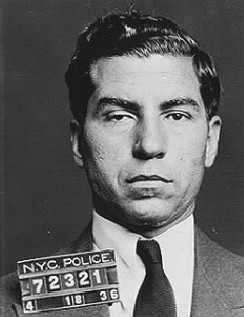
LUCKY LUCIANO
LUCKY’S LERCARA FRIDDI
MOBSTER FOOD SICILIAN COOKBOOK
RECIPES FROM LUCIANO’S HOMETOWN
LERCARA FRIDDI – SICILY
The SAME TOWN The AUTHORS FAMILY is FROM
And The SIANTAR FAMILY HOMETOWN as WELL
GRANDMA BELLINO’S ITALIAN COOKBOOK
EAT THE DISHES EATEN by THe SINATRA FAMILY
ANd LUCKY LUCIANO TOO !!!
.
JOE MASSERIA HITS VALENTI
LUCKY LUCINIO Does The DIRTY WORK
Outside JOHN’S of 12th STREET
.
Smarting over the recent attempt on his life, which had left two bullet holes through his hat and another two holes through his coat, Joe Masseria plotted bloody revenge in epic Italian Renaissance fashion.
Chief Assassin
The target of his wrath was Umberto Valenti, a seriously wily character who had blasted those bullet holes through Masseria’s hat and coat. According to the New York Times in 1915, Valenti was:
A former Black Hand extortionist, it was rumored that Valenti had killed over 20 men, a number of whom had been Masseria’s closest advisors. The thirty four year old Valenti was the chief assassin of Salvatore “Toto” D’Aquila, the New York Mafia’s supreme ruler, a Mafioso who was locked in vicious mob war with Masseria and his chief strategist Giuseppe “the Clutch Hand” Morello.
However, Masseria’s seemingly supernatural bullet dodging powers had given the hard noised, but superstitious, Valenti second thoughts. Second thoughts that had him suing for peace and walking into an ambush in one of New York’s most storied Italian restaurants, John’s of 12th Street, on August 11, 1922, a restaurant that has been used as a set on Boardwalk Empire and the Sopranos.
Well Dressed Gunmen
Whether or not Valenti sampled the chicken parmigiana before being croaked has been lost to the winds of history. However, some time around noon, Valenti and six laughing companions emerged from their luncheon. Walking eastward, smiles turned into frowns. Suddenly, Valenti spooked and bolted towards Second Avenue as two slick, well-dressed gunmen whipped out revolvers and fired. Gangland legend holds that one of the shooters was none other than Charley “Lucky” Luciano, Masseria’s newest protégé (the other shooter was probably Vito Genovese).
.
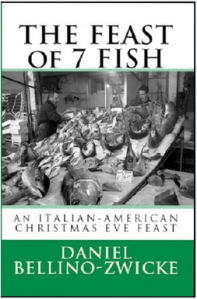
The FEAST of The 7 FISH
Italian Christmas
Pandemonium on 12thStreet
As the shots flew, pandemonium broke loose on 12th Street. Whirling around, the feared assassin drew a revolver just as a bullet flew through his chest.
A teenage witness told the New York Times:
Luciano’s Escape
Despite Valenti’s death, the friendly Luciano and his pals weren’t done yet. A crowd formed to block the gunmen’s escape so the mobsters opened fire, hitting a street sweeper and a little girl visiting from New Haven Connecticut. The shots dispersed the crowd, and the hitmen disappeared into a nearby tenement.
Should I Bring Pajamas?
Masseria was arrested for the murder. During his arrest, he supposedly grinned and asked the police:
… whether he would need a nightshirt remarking, that the last time he slept in the station house they forgot to give him a pillow or pajamas.
For a job well done, Joe Masseria elevated Luciano to a leadership position at his headquarters in the Hotel Pennsylvania. All murder charges were eventually dropped, and Masseria, on his way to becoming Joe the Boss, set his sights on Valenti’s overlord, Toto De Aquila, New York’s boss of bosses.
However, John’s of 12th had another infamous last meal lined up twenty years later. The victim would be Carlo Tresca.
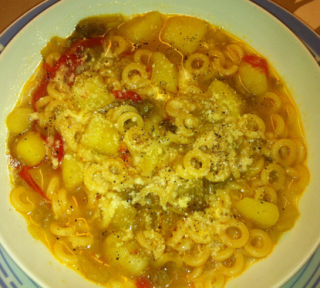
BASTA la PASTA !!!!
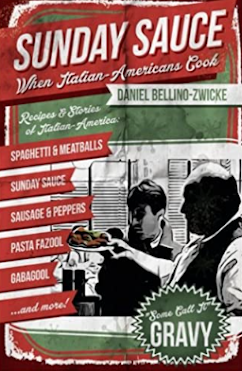
SUNDAY SAUCE
CHICKEN PARM, EGGPLANT PARM
LASAGNA, MEATBALLS
SUNDAY SAUCE and MORE
















 New York Italian